

Finding homes online is easy. Determining whether a home is truly worth the price, understanding disclosures, identifying potential risks, and negotiating favorable terms requires experience. Learn how working with an experienced Broker can help you make informed decisions and avoid costly mistakes when buying a home.
Continue readingAs Belmont Celebrates 100 Years, the Ghosts of Its Past Still Remain
The Ghosts of Belmont: A Lost Golf Course, a Round Tower, and the Men Who Left Their Names Behind
Have you ever driven through Belmont and wondered who the people behind the street names were?
Not just wondered briefly, but really wondered.
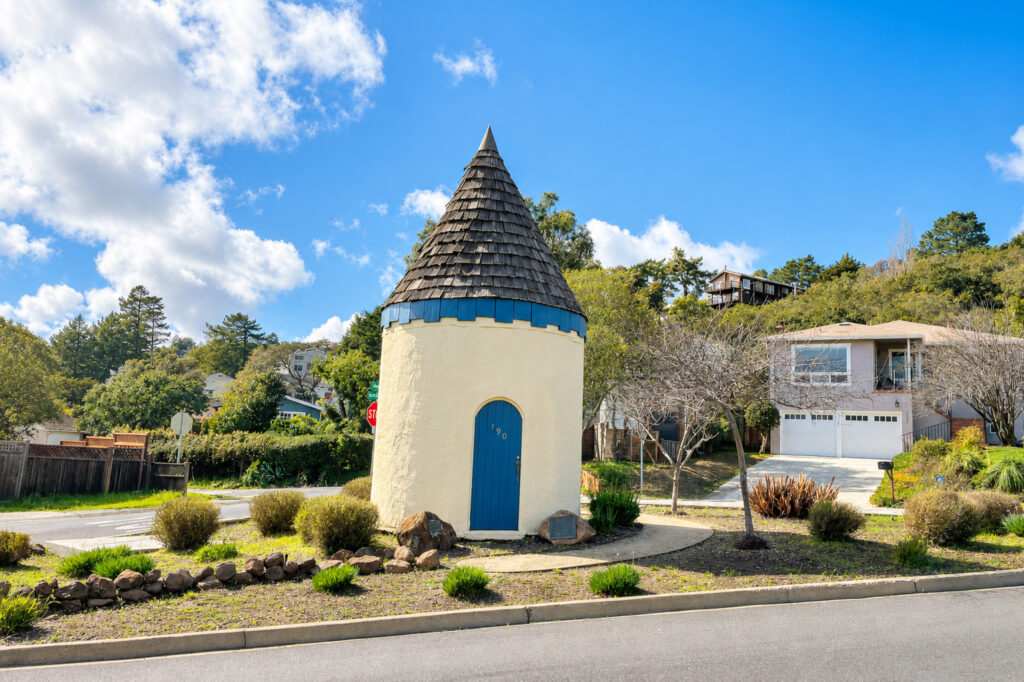
Who was Lyon? Why is there a Monroe Drive? Was Alameda de las Pulgas always called that? And what is the story behind that curious little round turret building that still stands along the roadway like something left behind from another century?
The answers are hiding in plain sight.
Every day, thousands of Belmont residents travel roads named after men they have never met, pass buildings whose original purpose has long been forgotten, and live atop land that once held dreams grand enough to rival the Peninsula’s most exclusive communities.
To uncover the mystery, we need to travel back a century.
A Grand Vision in the Wooded Hills
The year was 1925.
Belmont was still largely undeveloped, a collection of wooded hillsides and open land nestled between San Francisco and San Jose. Yet three men saw something more.
Arthur Lyon.
Lee Monroe.
Lawrence Miller.
Together they formed Belmont Country Club Properties and set out to create what they hoped would become one of the Peninsula’s most prestigious residential communities.
If those names sound familiar, they should.
Their names still appear on Belmont street signs today.
In fact, Mr. Lyon seems to have enjoyed a certain advantage in the naming process. Belmont eventually honored him twice, with both Lyon Avenue and Arthur Avenue preserving his place in local history.
Their plan was ambitious.
Perhaps even audacious.Imagine an elegant country club overlooking the hills, surrounded by an 18-hole golf course called Hillcrest. There would be tennis courts, handball courts, a swimming pool, a children’s wading pool, and beautifully designed homes arranged around manicured fairways.
The centerpiece would be a magnificent clubhouse named Belle Monte.
The price tag?
A staggering $65,000 in 1925.
The Round Tower Mystery

Across from the clubhouse stood an unusual little building.
Round.
Compact.
Almost whimsical.
Many Belmont residents have noticed it while driving along Alameda de las Pulgas.
Most assume it was somebody’s odd residence.
It wasn’t.
The tiny structure served as the sales office for the development.
This was where prospective buyers came to imagine their future lives among Belmont’s rolling fairways and elegant homes.
The building still survives today, quietly guarding its century-old secret while traffic rushes past.
Free Beer and Real Estate
Selling homes in the 1920s required creativity.
Or perhaps persuasion.
Belmont Country Club Properties offered free transportation from San Francisco to Belmont.
Prospective buyers would board buses, enjoy refreshments—including beer—and tour the property while salesmen painted pictures of country club living and leisurely afternoons on the golf course.
Purchase a lot and the membership in the country club was included.
For $100, residents gained access to what promised to become one of the most desirable recreational destinations on the Peninsula.
It was a marketing strategy that would probably attract attention from modern regulators.
But in the Roaring Twenties, it worked.
For a while.
The Dream Unravels
Then came 1929.
The stock market crashed.
The economy collapsed.
And Belmont’s grand experiment suddenly found itself fighting for survival.
Memberships dwindled.
Families moved away.
The developers attempted to keep the club alive by opening it to the public, but the economic forces sweeping across America proved too powerful.
The corporation eventually went bankrupt.
The dream was over.
Or so it seemed.
The Fairways Disappear

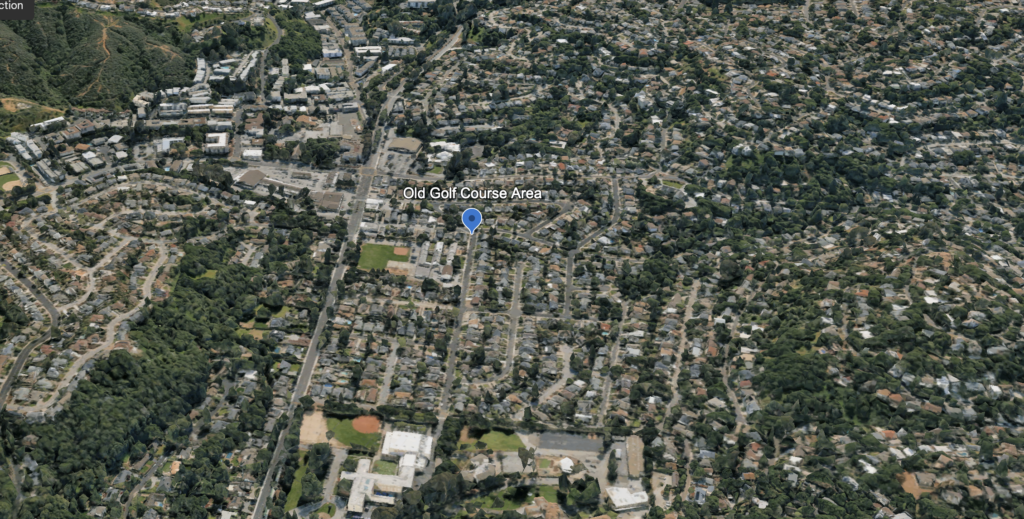
Today, Belmont residents may have no idea they are living on what was once a golf course.
Following World War II, housing was desperately needed for returning veterans and their families.
The fairways were subdivided.
Homes replaced greens.
Roads replaced cart paths.
The golf course quietly vanished beneath a growing suburb.
Yet clues remain for anyone willing to look.
Street names such as Fairway still hint at the land’s former purpose.
Several stately homes that once bordered the course still stand and are now listed on Belmont’s historic registry.
Like archaeological fragments, they are reminders of a forgotten chapter in Belmont’s story.
But if you know where to look, their fingerprints remain everywhere.

History has a way of disappearing quietly. Fairways become neighborhoods. Sales offices become curiosities. Names on street signs lose their stories. Yet Belmont’s past remains all around us for those willing to look a little closer. The next time you drive down Lyon Avenue, Monroe Drive, or past the round tower on Alameda de las Pulgas, remember that you’re passing through the remnants of a dream nearly one hundred years old.
As always, Thabnk for reading along…

Drew and Christine Morgan are experienced REALTORS and NOTARY PUBLIC located in Belmont, CA, where they own and operate MORGANHOMES, Inc. They have assisted buyers and sellers in their community for over 30 years. Drew and Christine have received the coveted Diamond award, ranking among the top 50 agents nationwide and the top 3 in Northern California by RE/MAX. To contact them, please call (650) 508.1441 or emailinfo@morganhomes.com.
For all you need to know about Belmont, subscribe to this blog right here. You can also follow us on Facebook and on X.
This article provides educational information and is intended for informational purposes only. It should not be considered real estate, tax, insurance, or legal advice; it cannot replace advice tailored to your situation. It’s always best to seek guidance from a professional familiar with your scenario.
BROKER | MANAGER | NOTARY
Belmont’s FAT: Sometimes Bigger Really Is Better
In Belmont real estate, not all square footage is created equal.
Many homeowners have heard the term “FAT” mentioned in conversations about hillside development, additions, or vacant land — but few fully understand what it means or how it can affect property value and future building potential.
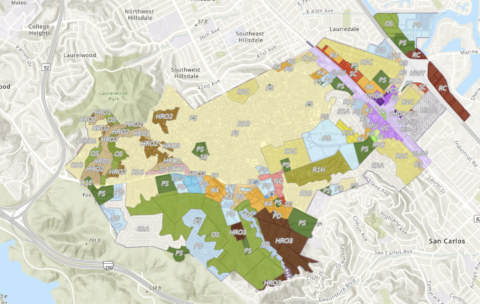
In Belmont, “FAT” stands for Floor Area Transfer — a unique zoning tool primarily associated with certain Hillside Residential and Open Space zoning districts, commonly referred to as HRO zones. The program was designed to help balance hillside preservation with reasonable residential development opportunities. Try this link to see Belmont’s interactive zoning map.
For some property owners, FAT can create valuable development opportunities. For others, it may permanently limit future expansion rights. Understanding how it works is important whether you are remodeling, purchasing vacant land, or simply evaluating your home’s long-term potential.
What Is a Floor Area Transfer?
In simple terms, Belmont’s FAT program allows allowable building square footage to be transferred from one property to another under certain conditions.
Some hillside lots in Belmont are steep, difficult to access, environmentally sensitive, or otherwise poorly suited for development. Other nearby lots may be more practical building sites.
The FAT system was created to preserve open space and hillside character, reduce excessive grading and environmental impact, concentrate development in more suitable areas, and provide flexibility for certain homeowners.
Where Does FAT Apply?
Floor Area Transfers are most commonly associated with Belmont’s Hillside Residential and Open Space zoning districts, particularly HRO-2 areas in locations such as portions of the San Juan Canyon and Western Hills neighborhoods. Here’s a link to Belmont’s interactive zoning map,
These areas often involve steep slopes, geological considerations, limited road access, tree preservation requirements, environmental review, and complex grading constraints.
Why FAT Can Benefit Some Homeowners
For certain properties, FAT can create meaningful value.
A homeowner who wishes to expand beyond the normally permitted floor area may potentially obtain additional square footage through a transfer arrangement, subject to City approval and zoning requirements.
Potential benefits may include larger homes in areas with restrictive base limits, greater flexibility for additions or remodels, improved long-term resale appeal, and enhanced usability of otherwise constrained parcels.
Why Some Vacant Lots Sell for Surprisingly Low Prices
One common source of confusion involves vacant hillside parcels advertised online at prices far below typical Belmont land values.
Buyers sometimes assume these lots are bargains when, in reality, many come with substantial development limitations. Some may require additional Floor Area Transfers, extensive engineering, or may already have transferred away their development rights.
Important Considerations Before Buying or Remodeling
Because FAT regulations can involve zoning interpretation, planning approvals, recorded easements, geological review, and design review requirements, homeowners should consult directly with the City of Belmont Planning Department and qualified professionals before making assumptions about development potential.
In Belmont Hillside development, details matter.
The Bigger Picture
Belmont’s FAT program reflects the broader balancing act that defines much of Peninsula real estate: how cities preserve neighborhood character and environmental sensitivity while still allowing homeowners reasonable flexibility and property rights.
Whether one agrees with every aspect of the system or not, Belmont’s approach has helped preserve significant portions of the city’s hillside character while allowing selective development opportunities in appropriate locations.
Final Thoughts
Real estate value is not determined by square footage alone.
In Belmont, zoning, usability, topography, and development potential can dramatically affect a property’s long-term value and possibilities.
At MorganHomes, we believe informed homeowners make better long-term real estate decisions.
And in a city as nuanced as Belmont, local knowledge matters.
Thank for reading along.

Drew and Christine Morgan are experienced REALTORS and NOTARY PUBLIC located in Belmont, CA, where they own and operate MORGANHOMES, Inc. They have assisted buyers and sellers in their community for over 30 years. Drew and Christine have received the coveted Diamond award, ranking among the top 50 agents nationwide and the top 3 in Northern California by RE/MAX. To contact them, please call (650) 508.1441 or emailinfo@morganhomes.com.
For all you need to know about Belmont, subscribe to this blog right here. You can also follow us on Facebook and on X.
This article provides educational information and is intended for informational purposes only. It should not be considered real estate, tax, insurance, or legal advice; it cannot replace advice tailored to your situation. It’s always best to seek guidance from a professional familiar with your scenario.
BROKER | MANAGER | NOTARY
Are Belmont Homes Still Getting Multiple Offers in Today’s Market?
The Hidden Opportunity: Why Some Belmont Sellers Are Winning Right Now
You may have heard that higher interest rates have “slowed the market.” But here in Belmont, the story on the ground looks very different.
Just last week, a home on Francis Court — where we were writing an offer for our buyers — received 27 offers. That’s not a slowdown. That’s serious demand.
What’s Really Driving the Market?
The biggest factor today isn’t interest rates — it’s low inventory.
Many homeowners are staying put because they have low mortgage rates or aren’t sure where they’d move next. The result? Fewer homes for sale. And when a well-prepared home in a good Belmont location hits the market, buyers don’t have many options — so competition can be intense.
Today’s Buyers Are Serious
Buyers right now are:
- Well qualified
- Well funded
- Focused on the long term
When the right home comes along, they act quickly — and often aggressively.
But here’s the key:
Not every home gets multiple offers.
The homes that win typically have:
- Smart, realistic pricing
- Strong preparation and presentation
- Clear value compared to recent sales
- A desirable micro-location (flat streets, walkability, commute access, etc.)
In today’s market, strategy matters more than ever.
The Hidden Opportunity for Sellers
Because inventory is so limited, prepared sellers currently have:
- Less competition
- Highly motivated buyers
- Strong negotiating leverage
- The potential for multiple offers
The Francis Court property is a perfect example of what happens when strong demand meets limited supply.
Should You Wait for Rates to Drop?
Many homeowners ask this question.
The reality is: when rates fall, more buyers will enter the market — but so will more sellers.
That means more competition.
Right now, the environment is unusual:
Strong demand with limited competition.
Belmont Is a Local Market
Home values here depend on the details — street location, lot usability, expansion potential, commute access, and neighborhood feel. Understanding how buyers see these factors often makes the difference between a good result and a great one.
Curious What Your Home Might Do Today?
The headlines may sound uncertain, but locally, well-positioned homes are still performing very well.
If you’re wondering what your home might sell for — or whether this market makes sense for you — we’re always happy to provide a local, no-pressure analysis.
Because in today’s Belmont market, success comes from preparation and strategy — not timing the headlines.
Enjoy the day!

Drew and Christine Morgan are experienced REALTORS and NOTARY PUBLIC located in Belmont, CA, where they own and operate MORGANHOMES, Inc. They have assisted buyers and sellers in their community for over 30 years. Drew and Christine have received the coveted Diamond award, ranking among the top 50 agents nationwide and the top 3 in Northern California by RE/MAX. To contact them, please call (650) 508.1441 or emailinfo@morganhomes.com.
For all you need to know about Belmont, subscribe to this blog right here. You can also follow us on Facebook and on X.
This article provides educational information and is intended for informational purposes only. It should not be considered real estate, tax, insurance, or legal advice; it cannot replace advice tailored to your situation. It’s always best to seek guidance from a professional familiar with your scenario.
BROKER | MANAGER | NOTARY
Two Powerful Selling Strategies—Which One Is Right for Your Home?
The truth is, both approaches have their merits…
Continue readingBeneath the Surface: Navigating the Turbulent Waters of Home Purchases
Consumers stand on the precipice of change, facing a future where the very essence of home buying is upended.
Continue readingHow to Stop Agents from Behaving Badly at Your Expense
Fed Interest Rate Hikes and Your Mortgage
By now you’ve probably heard that interest rates will soon be rising. The media reports simple sound bites such as, “Interest Rates Rise” which is of little help in understanding to which interest rates they are referring—credit card debt, student loan, small business loans or home loans?
Why are the Feds Raising Rates and What will it Mean?
The Federal Reserve rate making the news is set by the Federal Open Market Committee, which is part of the Federal Reserve. It is used as part of a monetary policy to attempt to help smooth the inevitable business cycles that the economy experiences.
When we hear “The Feds are going to raise rates”, it’s important to note that specific change to the Federal Reserve overnight rate affects adjustable-rate mortgages. One must also watch Treasury Notes and Bonds for volatility in fixed rate mortgages.
The Federal Reserve keeping interest rates low helped us all through the 2007-2009 recession and again was employed during the Pandemic to help keep the economy from wild market force swings.
After the housing bubble burst in 2007, conforming loans actually had higher interest rates due to their greater propensity for default, while Jumbo loans enjoyed smaller rates of default as they were often tired to a properties with more equity.
But the Fed needs room to maneuver and raising the rate to more normal levels gives them some ammo in their arsenal in the event they need to employ their interest rate weapon again.
Since the attack on Ukraine, the feds have already signaled that they will slow any rate hikes this year for fear of stalling the economy. Once they begin raising rates it will serve to slow down the current high inflation by dampening spending.
This is a good illustration of how the Feds use this tool during recessions to stimulate or suppress the economy.
What Effect Interest Rate Hikes will have on Home Loans?
As we discussed in an earlier blog, the Federal Reserve rate—does not necessarily mean home loans will follow suit—though some often do.
- The 10 year Note (typically affects 15 year fixed rate mortgages)
- The 30 year Bond (typically affects 30 year fixed rates)
- The Federal Funds Rate (affects Adjustable Mortgage rates)
As interest rates on Treasury notes rise, banks can raise the interest rates on new fixed rate mortgages. That means home buyers will have to pay more each month for a loan which in turn takes away purchasing power. Typically, when interest rates rise, home prices fall. When housing prices fall, the economy slows.
One of the rates most often discussed is the 10-year note. This frequently serves as a benchmark for setting long-term rates like commercial and residential mortgages. This rate is not directly set by the government. It is determined by market forces, often as simple as supply and demand.
Although today’s rates aren’t crazy by historical standards, they are higher than they have been in years, and that’s likely to have a small effect in the housing market — though we don’t see housing prices to declining significantly.
“More than a decade of chronic underbuilding and millions of millennials moving into the homebuying stage of life has created a significant imbalance between housing supply and demand,” McBride from Bank Rate said.“While rapidly rising mortgage rates may temper the demand somewhat, don’t expect home price appreciation to come to a halt. A more modest pace of appreciation is the likelier outcome.
More About Mortgages
Conventional mortgages fall into two main categories: “conforming” and “nonconforming” loans.
Conforming loans are home loans that are purchased by government entities such as Fanny Mae and Freddie Mac and must meet their guidelines such as the amount of down payment. These organizations make the access to more mortgage loans available. These tend to be smaller loans.
The Federal Housing Finance Agency (FHFA) raised the 2022 Conforming loan limits in California. This allows some mortgage loans that were previously labeled “Jumbo” to now be placed in the Conforming loan limit category. Conforming loans in California generally come with better mortgage rates and easier underwriting requirements.
A ”Jumbo” loan is considered a non-conforming loan, when it is in excess of the loan limits allowed for a conforming loan.
What Are The 2022 Conforming Loan Limits in the Bay Area?
San Francisco, San Mateo & Santa Clara all have the highest limits available—$970,800 for a conforming loan.
What Does this Mean for You?
If you’re a homeowner thinking of selling, higher rates could impact the amount buyers can overbid for your home, as higher rates impact purchasing power.
If you’re a buyer, it means money will cost you more going forward so finding a home sooner rather than later could save you thousands of dollars. Every time there’s a tick up in interest rates buyers get more anxious about completing a purchase—so expect more short-term competition.
Our belief is that a modest rise in the fed rate will have a nominal effect on interest rates, but since lenders can react in any way they choose, all bets are off to definitively say how the upcoming rate hikes will impact our local housing market.
Drew & Christine Morgan are REALTORS/NOTARY PUBLIC in Belmont, CA. with more than 25 years of experience in helping sellers and buyers in their community. As Diamond recipients, Drew and Christine are ranked in the top 50 RE/MAX agents nationwide and the top 3 in Northern California. They may be reached at (650) 508.1441 or emailed at info@morganhomes.com.
For all you need to know about Belmont, subscribe to this blog right here. You can also follow us on Facebook at https://www.facebook.com/Morganhomes and on Twitter @ https://twitter.com/morganhomes
The information contained in this article is educational and intended for informational purposes only. It does not constitute real estate, tax, insurance or legal advice, nor does it substitute for advice specific to your situation. Always consult an appropriate professional familiar with your scenario.
A LOOK AT 2021 HOUSING AND WHAT LIES AHEAD IN 2022
Unless you’ve been living under a rock the past two years, you’ve no doubt heard that home values climbed their assent into the stratosphere.

But as local agents for over 25 years, even we have a hard time wrapping our heads around the staggering numbers.
You may have also heard that there’s “no inventory”. Well, that’s not exactly true.
Then what’s causing the spike in prices? High demand, not lack of supply—unlike the overall economy that’s suffering from a lack of supply and high demand.
Comparing the annual number for 2020 to 2021, we’ll start with the inventory of homes for sale.
The number of new listings that came on the market in 2020 was 234 in 2020 and 249 in 2021 which is an increase of 6.4% more homes available for sale in 2021. Then why is everyone talking about low inventory? Because sales went from 183 units in 2020 to 254 in 2021—a whopping 38% increase—so there are no homes left to buy.
One might ponder, “How can that be?” If you only have an increase of 6.4% in new listings, how can you have 38% more sales. The answer is everything is selling in 2021 while in 2020 some of those new listings never made it into escrow.
That’s evident in the days on market, which dropped 45%, from 20 days to only 11, and the percent a seller received over the asking price climbed from 105% in 2020 to 114% in 2021.
Another indicator of the scant number of homes available at any given moment is the “Months of Inventory” statistic, that measures how long it would take to sell all of the available inventory at the current rate of sales. That dropped from a meager .4 months, to an almost immeasurable .1 month, (overall, the U.S. stands at around six months of inventory at any given time).
What effect did this have on home values? Nothing, but it had a lot to do with home prices. They hit their highest level in history recording a median home price of $2,245,000 up from $1,888,000—a 19% increase YOY and a 28% increase in the past two years—while the size of homes selling in the last two periods stayed statistically similar at 1,968 and 1,962 square feet respectively.
This is an article we did back in 2018 on the supposed crest of interest rate hikes.
There is some cooling off of the astronomical climb in prices as noted by the Case-Shiller study for the Bay Area’s metropolitan area, but that may not reflect our local hot spot trends in the mid-peninsula.
What to Watch Out For

Rising interest rates may give buyers some relief from a super-heated market, may also serve to quell their purchasing power while softening prices. The irony is just when buyers may be able to compete in the market, even if they were to pay less for a home, they’ll end up paying more in interest in their loans.
Drew & Christine Morgan are REALTORS/NOTARY PUBLIC in Belmont, CA. with more than 25 years of experience in helping sellers and buyers in their community. As Diamond recipients, Drew and Christine are ranked in the top 50 RE/MAX agents nationwide and the top 3 in Northern California. They may be reached at (650) 508.1441 or emailed at info@morganhomes.com.
For all you need to know about Belmont, subscribe to this blog right here. You can also follow us on Facebook at https://www.facebook.com/Morganhomesand on Twitter @ https://twitter.com/morganhomes
The information contained in this article is educational and intended for informational purposes only. It does not constitute real estate, tax, insurance or legal advice, nor does it substitute for advice specific to your situation. Always consult an appropriate professional familiar with your scenario.
BELMONT HOME VALUES CONTINUE THEIR ASCENT AS SALES DECLINED
It wasn’t just Sir Richard Branson and Jeff Bezos that have shepherded in a new era. Belmont single family homes values have continued their pandemic born steep ascent.

First, the numbers:
Belmont home values continued their astronomical ascent as sales declined in September of 2021. Belmont sales of single family homes fell 9.6% from September of 2020 to the same period in 2021. Compared to September of 2019, pre-pandemic, sales were up this year more than 53% in 2021.
The average time it took to sell a home went down from 19 days to 12.
The Months of Inventory—the time it would take to sell all the homes on the market at the current rate of sales—went from .8 months down to .5, and the available inventory of homes to choose from went from 21 in 2020, to only 11 in 2021. To put this into perspective, the U.S. housing inventory sits at 6.1 months.
The median home price rose from $1,925,000 to $2,235,000, close to a 12% increase YOY. It’s important to note that the size of homes selling in these two periods went down, from 2,150 ft² to 1,737 ft², a 19% decrease, which serves to only magnify the cost to the consumer.
The price per ft² in 2020 was $979 and increased to $1,299 in 2021. It’s typical for the price per square foot to go up when smaller homes are selling, since it does not take into consideration the lot which the homes sit upon.
What is noteworthy is while the size of homes selling in these two periods went down 19%, prices went up 12%—illustrating that for 12% more in 2021, one could only get a 19% smaller home.
The percentage sellers received also went up from 101% of the asking price in 2020 to 112% in 2021, underscoring the strong demand.
Due to the increase in home values, the cost of home ownership, while borrowing money at 3% interest, went up $1,000 per month in just the last year. If interest rates were to rise to just 4%, the median price home in Belmont would cost ~ additional $1,000 per month.
According to Mike Farrell of Wells Fargo, a person wishing to buy the median priced Belmont home with 20% down in 2020 needed to earn ~$225,0000 a year, while in 2021 that rose to $300,000 per year. That’s assuming the borrower has no other debt, such as credit card, car payments or school loans.
For buyers with stock options, puting a larger down payment may be an option to increase their buying power without worrying about needing more income to qualify for a mortgage. But for buyers with traditional salaries—essential workers from Teachers, Police, Firefighters, and hospital workers to grocery store employees, and restaurant workers who, without help from outside wealthy family members, will have little hope of ever buying into the dream of home ownership in the Bay Area.
Unfortunately, we see the same story playing out in San Mateo County as a whole.
The most important take-aways from these numbers are the median home price, which jumped 6% YOY, while the size of homes selling were 2% smaller, and the percentage the seller received of their asking price jumped 6 percentage points from 102% of asking to 108%.
As a direct result of the pandemic, many apartment renters, and condominium owners, found to work from home—and in many cases home school children, they needed more space. Since public gatherings were off the table—they wanted a yard as well as no common areas such as elevators. This created a glut of condominiums on the market.
It goes without saying, that we are in unchartered waters in terms of housing demand. Looking at this data from Case-Shiller®️, as compiled by FRED®, which covers the San Francisco MSA (Metropolitan Statistical Area) comprised of five of the nine Bay Area Counties, one can see the dramatic spike in home values beginning in 2020.
If you have considered selling your home and would like to maximize the proceeds from your sale, please contact us for a no obligation assessment.
Drew & Christine Morgan are REALTORS/NOTARY PUBLIC in Belmont, CA. with more than 25 years of experience in helping sellers and buyers in their community. As Diamond recipients, Drew and Christine are ranked in the top 50 RE/MAX agents nationwide and the top 3 in Northern California. They may be reached at (650) 508.1441 or emailed at info@morganhomes.com.
For all you need to know about Belmont, subscribe to this blog right here. You can also follow us on Facebook at https://www.facebook.com/Morganhomes and on Twitter @ https://twitter.com/morganhomes
The information contained in this article is educational and intended for informational purposes only. It does not constitute real estate, tax, insurance, or legal advice, nor does it substitute for advice specific to your situation. Always consult an appropriate professional familiar with your scenario.