
In Belmont real estate, not all square footage is created equal.
Many homeowners have heard the term “FAT” mentioned in conversations about hillside development, additions, or vacant land — but few fully understand what it means or how it can affect property value and future building potential.
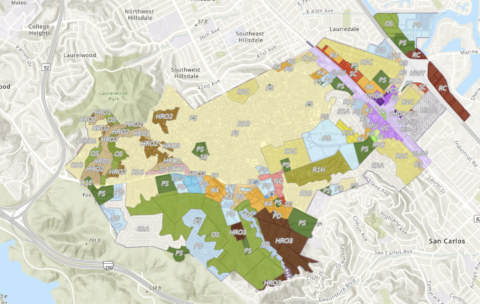
In Belmont, “FAT” stands for Floor Area Transfer — a unique zoning tool primarily associated with certain Hillside Residential and Open Space zoning districts, commonly referred to as HRO zones. The program was designed to help balance hillside preservation with reasonable residential development opportunities. Try this link to see Belmont’s interactive zoning map.
For some property owners, FAT can create valuable development opportunities. For others, it may permanently limit future expansion rights. Understanding how it works is important whether you are remodeling, purchasing vacant land, or simply evaluating your home’s long-term potential.
What Is a Floor Area Transfer?
In simple terms, Belmont’s FAT program allows allowable building square footage to be transferred from one property to another under certain conditions.
Some hillside lots in Belmont are steep, difficult to access, environmentally sensitive, or otherwise poorly suited for development. Other nearby lots may be more practical building sites.
The FAT system was created to preserve open space and hillside character, reduce excessive grading and environmental impact, concentrate development in more suitable areas, and provide flexibility for certain homeowners.
Where Does FAT Apply?
Floor Area Transfers are most commonly associated with Belmont’s Hillside Residential and Open Space zoning districts, particularly HRO-2 areas in locations such as portions of the San Juan Canyon and Western Hills neighborhoods. Here’s a link to Belmont’s interactive zoning map,
These areas often involve steep slopes, geological considerations, limited road access, tree preservation requirements, environmental review, and complex grading constraints.
Why FAT Can Benefit Some Homeowners
For certain properties, FAT can create meaningful value.
A homeowner who wishes to expand beyond the normally permitted floor area may potentially obtain additional square footage through a transfer arrangement, subject to City approval and zoning requirements.
Potential benefits may include larger homes in areas with restrictive base limits, greater flexibility for additions or remodels, improved long-term resale appeal, and enhanced usability of otherwise constrained parcels.
Why Some Vacant Lots Sell for Surprisingly Low Prices
One common source of confusion involves vacant hillside parcels advertised online at prices far below typical Belmont land values.
Buyers sometimes assume these lots are bargains when, in reality, many come with substantial development limitations. Some may require additional Floor Area Transfers, extensive engineering, or may already have transferred away their development rights.
Important Considerations Before Buying or Remodeling
Because FAT regulations can involve zoning interpretation, planning approvals, recorded easements, geological review, and design review requirements, homeowners should consult directly with the City of Belmont Planning Department and qualified professionals before making assumptions about development potential.
In Belmont Hillside development, details matter.
The Bigger Picture
Belmont’s FAT program reflects the broader balancing act that defines much of Peninsula real estate: how cities preserve neighborhood character and environmental sensitivity while still allowing homeowners reasonable flexibility and property rights.
Whether one agrees with every aspect of the system or not, Belmont’s approach has helped preserve significant portions of the city’s hillside character while allowing selective development opportunities in appropriate locations.
Final Thoughts
Real estate value is not determined by square footage alone.
In Belmont, zoning, usability, topography, and development potential can dramatically affect a property’s long-term value and possibilities.
At MorganHomes, we believe informed homeowners make better long-term real estate decisions.
And in a city as nuanced as Belmont, local knowledge matters.
Thank for reading along.

Drew and Christine Morgan are experienced REALTORS and NOTARY PUBLIC located in Belmont, CA, where they own and operate MORGANHOMES, Inc. They have assisted buyers and sellers in their community for over 30 years. Drew and Christine have received the coveted Diamond award, ranking among the top 50 agents nationwide and the top 3 in Northern California by RE/MAX. To contact them, please call (650) 508.1441 or emailinfo@morganhomes.com.
For all you need to know about Belmont, subscribe to this blog right here. You can also follow us on Facebook and on X.
This article provides educational information and is intended for informational purposes only. It should not be considered real estate, tax, insurance, or legal advice; it cannot replace advice tailored to your situation. It’s always best to seek guidance from a professional familiar with your scenario.
BROKER | MANAGER | NOTARY