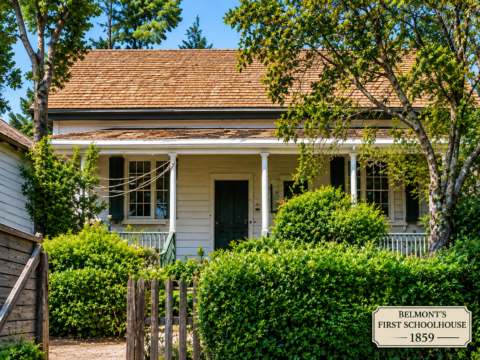
Belmont’s first students attended class in a local resident’s home. From a one-room schoolhouse and $50-a-month teacher to dead frogs in the well, discover what going to school was like in early Belmont.
Continue reading

Belmont’s first students attended class in a local resident’s home. From a one-room schoolhouse and $50-a-month teacher to dead frogs in the well, discover what going to school was like in early Belmont.
Continue reading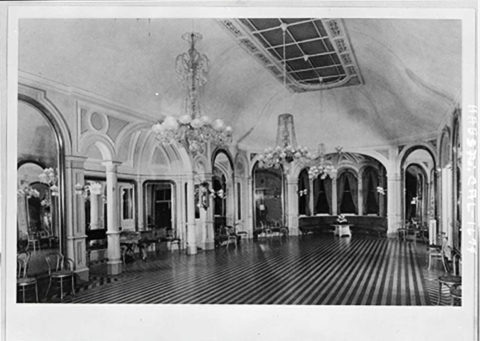
Long before Ralston Hall was built, Count Leonetto Cipriani established one of Belmont’s earliest estates. Discover how this Italian patriot helped shape local history and why Cipriani Boulevard proudly bears his name.
Continue reading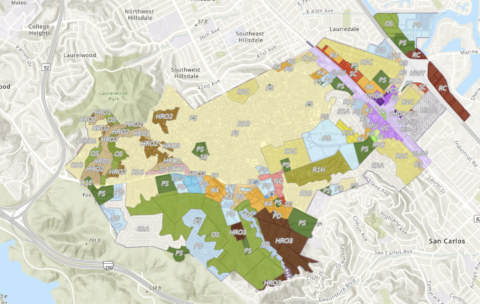
In Belmont real estate, not all square footage is created equal.
Many homeowners have heard the term “FAT” mentioned in conversations about hillside development, additions, or vacant land — but few fully understand what it means or how it can affect property value and future building potential.
In Belmont, “FAT” stands for Floor Area Transfer — a unique zoning tool primarily associated with certain Hillside Residential and Open Space zoning districts, commonly referred to as HRO zones. The program was designed to help balance hillside preservation with reasonable residential development opportunities. Try this link to see Belmont’s interactive zoning map.
For some property owners, FAT can create valuable development opportunities. For others, it may permanently limit future expansion rights. Understanding how it works is important whether you are remodeling, purchasing vacant land, or simply evaluating your home’s long-term potential.
In simple terms, Belmont’s FAT program allows allowable building square footage to be transferred from one property to another under certain conditions.
Some hillside lots in Belmont are steep, difficult to access, environmentally sensitive, or otherwise poorly suited for development. Other nearby lots may be more practical building sites.
The FAT system was created to preserve open space and hillside character, reduce excessive grading and environmental impact, concentrate development in more suitable areas, and provide flexibility for certain homeowners.
Floor Area Transfers are most commonly associated with Belmont’s Hillside Residential and Open Space zoning districts, particularly HRO-2 areas in locations such as portions of the San Juan Canyon and Western Hills neighborhoods. Here’s a link to Belmont’s interactive zoning map,
These areas often involve steep slopes, geological considerations, limited road access, tree preservation requirements, environmental review, and complex grading constraints.
For certain properties, FAT can create meaningful value.
A homeowner who wishes to expand beyond the normally permitted floor area may potentially obtain additional square footage through a transfer arrangement, subject to City approval and zoning requirements.
Potential benefits may include larger homes in areas with restrictive base limits, greater flexibility for additions or remodels, improved long-term resale appeal, and enhanced usability of otherwise constrained parcels.
One common source of confusion involves vacant hillside parcels advertised online at prices far below typical Belmont land values.
Buyers sometimes assume these lots are bargains when, in reality, many come with substantial development limitations. Some may require additional Floor Area Transfers, extensive engineering, or may already have transferred away their development rights.
Because FAT regulations can involve zoning interpretation, planning approvals, recorded easements, geological review, and design review requirements, homeowners should consult directly with the City of Belmont Planning Department and qualified professionals before making assumptions about development potential.
In Belmont Hillside development, details matter.
Belmont’s FAT program reflects the broader balancing act that defines much of Peninsula real estate: how cities preserve neighborhood character and environmental sensitivity while still allowing homeowners reasonable flexibility and property rights.
Whether one agrees with every aspect of the system or not, Belmont’s approach has helped preserve significant portions of the city’s hillside character while allowing selective development opportunities in appropriate locations.
Real estate value is not determined by square footage alone.
In Belmont, zoning, usability, topography, and development potential can dramatically affect a property’s long-term value and possibilities.
At MorganHomes, we believe informed homeowners make better long-term real estate decisions.
And in a city as nuanced as Belmont, local knowledge matters.
Thank for reading along.

Drew and Christine Morgan are experienced REALTORS and NOTARY PUBLIC located in Belmont, CA, where they own and operate MORGANHOMES, Inc. They have assisted buyers and sellers in their community for over 30 years. Drew and Christine have received the coveted Diamond award, ranking among the top 50 agents nationwide and the top 3 in Northern California by RE/MAX. To contact them, please call (650) 508.1441 or emailinfo@morganhomes.com.
For all you need to know about Belmont, subscribe to this blog right here. You can also follow us on Facebook and on X.
This article provides educational information and is intended for informational purposes only. It should not be considered real estate, tax, insurance, or legal advice; it cannot replace advice tailored to your situation. It’s always best to seek guidance from a professional familiar with your scenario.
BROKER | MANAGER | NOTARY

Though the landscape may appear bleak to some, to others, doors have opened to greener pastures offering new market opportunities.
We guessed correctly that around this time, home prices would start to look more like they did a year ago than two years ago.
Looking in the rear-view mirror, home prices hit their all-time high in April of 2022 before beginning what would be a reverse of fortune for sellers over the next year.
Most indicators remain down over last year, but not so much in the price decrease department. What has taken a hit is the inevitable drop in sellers choosing to move for fear of losing their low fixed mortgage rate.
Take Belmont, for example. The number of new listings dropped 27% YOY as compared to June 2022.
The Inventory—or the number of homes left for sale at the end of the month dropped 56%, a strong indicator that there is still strong demand for homes.
One more home sold this month than last year, which is statistically insignificant, but it underscores that our meager inventory is moving.
The days a home is on the market is back to a more normal 12, up from eight when the bidding frenzy in Q1 of 2022 was at its peak.
The percent a seller receives of the asking price is around 105%—down from 107% a year ago, but still indicating overbidding on select homes.
The Belmont median home price is down 12.3% YOY, as some air escapes from the brief bubble in 2022.
San Mateo County fared about the same:
News listings declined 27%
Inventory dropped 30%
Sales were down 8%
The median home price came down 5%
And the time it took to sell a home increased by 50%
We still have less than one month of housing inventory in Belmont and 1.4 months in San Mateo County, which is lower than the rest of the country by about five months.
Currently, half of the homes being sold are fetching prices above the seller’s asking price, indicating the presence of multiple bids, while the other half are selling for less. Sellers are still receiving lower prices than they could have obtained a year ago during the brief bubble. However, given the rapid 14% price increase in the first three months of 2022, it is evident that there was considerable room for a market correction.
With prices rising by 14% in the first quarter of 2022, it was anticipated that a portion of the price surge would not be sustainable.
TAKE AWAY
Interest rates have increased again recently and will probably stay at these levels for the remainder of the year. That’s not helping buyers or sellers. Buyers can afford less home, or less expensive homes, and sellers don’t want to move, which puts more pressure on holding home prices at bay.
Since the local housing market heavily relies on the interplay of supply and demand, if interest rates remain high and an increase number of sellers feel compelled to sell, the growing inventory of homes for sale will intensify the pace of home price decreases.
We understand how difficult it is to try and time one’s life around the housing market—whether to move now or later and what would be optimal. Two things will impact the housing next year that we can anticipate. With the Presidential Election, we expect a repeat of diminished housing market activity as we near summer. And mortgage interest rates are expected to come down. This may entice more sellers into the market, diluting the pool of possible buyers for homes. If you are considering a move, be sure to contact us soon so that we may advise you early on as to the best time next year to sell.
Drew & Christine Morgan are REALTORS/NOTARY PUBLIC in Belmont, CA. with more than 30 years of experience in helping sellers and buyers in their community. As Diamond recipients, Drew and Christine ranked in the top 50 RE/MAX agents nationwide and the top 3 in Northern California. They may be reached at (650) 508.1441 or emailed at info@morganhomes.com.
Drew Morgan, Broker Associate 01124318 | Christine Morgan, Sales Associate 01174047
For all you need to know about Belmont, subscribe to this blog right here. You can also follow us on Facebook and on Twitter.
The information contained in this article is educational and intended for informational purposes only. It does not constitute real estate, tax, insurance or legal advice, nor does it substitute for advice specific to your situation. Always consult an appropriate professional familiar with your scenario.