
Streets Around Us: Benson Way — The Belmont Mayor Behind the Name

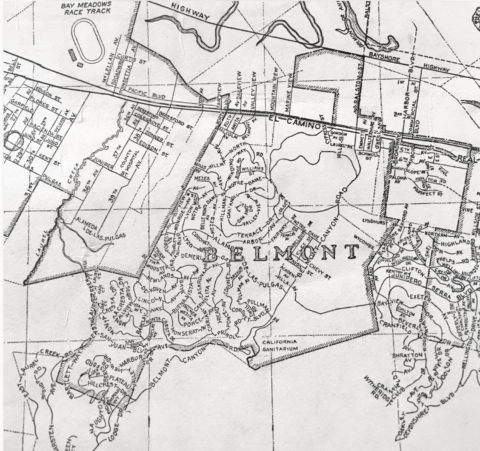
Historical map of Belmont, California, showing early streets and neighborhood development

The story of Wallace “Wally” Benson, whose dedication to Belmont earned him a lasting place in the city’s history.

Every school day, parents travel up Benson Way in Belmont’s Belcrest Gardens neighborhood, taking their children to Fox Elementary School. It’s a familiar route for generations of Belmont families, but how many know the story behind the street’s name?

Benson Way honors Wallace “Wally” Benson, a longtime Belmont mayor, businessman, and community leader who devoted much of his life to public service.

And according to local historian Russel Estep, there was something else that made Wally especially memorable: he was rarely seen without a cigar.

A Familiar Face in Early Belmont

Wallace Benson was born in Louisiana and eventually made his way to California. In 1946, he and his wife moved to Frances Court in Belmont, where they established their home.

Before beginning his successful career in insurance, Benson occasionally worked as a driver for a wealthy patient residing at the Twin Pines Sanitarium, once located at what is now Twin Pines Park.

He later joined the Argonaut Insurance Company in San Francisco, where he steadily advanced through the organization, first becoming a special agent and eventually rising to vice president. His career with Argonaut spanned 25 years before his retirement.

But it was his dedication to Belmont that would leave his most enduring legacy.

Twelve Years as Belmont’s Mayor

Benson became mayor in December 1955, succeeding Udo Rosellini, who had resigned from the position. Fellow councilmember Charles H. Cook seconded Benson’s nomination.

Estep credited Benson with serving as mayor for 12 years, although he also reported that Benson left the City Council in 1966.

Those were important years in Belmont’s development. The community was transitioning from a relatively small Peninsula town into an increasingly established residential city, with growing neighborhoods and an expanding need for municipal services and regional planning.

The Mayor and His Trademark Cigar

Every community has memorable personalities, and Wally Benson was certainly one of Belmont’s.

Russel Estep, who knew Benson personally, recalled that, much like British Prime Minister Winston Churchill, Wally almost always had a cigar in his mouth.

It became his trademark.

Estep humorously suggested that Benson may have been Belmont’s only councilmember known for constantly smoking cigars.

There was even a running joke about the demands of his public service. Some residents reportedly observed that Wally was so busy working on city affairs that he couldn’t keep his cigar lit.

The image is an amusing reminder of a different era in local politics, when city leaders were familiar neighborhood figures and public service was often balanced with full-time professional careers.

Behind the cigar, however, was a man whom Estep remembered for his enthusiasm, energy, and commitment to improving Belmont.

A Street Named in His Honor

Benson Way, a short residential street in Belcrest Gardens, was named to recognize Wally’s years of service to the community.

The street lies between Hallmark and St. James Avenue and serves as a familiar route uphill toward Fox Elementary School.

For the families who live along Benson Way, and the many parents who travel it during the school year, the name is part of everyday life.

Yet it represents something more than a convenient address or a route to school.

It commemorates a man who spent years participating in the decisions and regional planning efforts that helped shape Belmont’s future.

While many public officials eventually fade from public memory, street names have a remarkable way of keeping their stories alive.

The History We Travel Every Day

Today, Benson Way continues to serve the Belcrest Gardens neighborhood, connecting homes and families with the daily activities of community life.

Each morning, as parents make their way toward Fox Elementary School, they’re traveling along a street named for someone who helped guide Belmont through an important chapter of its history.

Most may never have heard of Wallace “Wally” Benson, or know about the cigar-smoking mayor who spent so many years working for the city he loved.

But his name remains, quietly woven into the neighborhood.

More Stories Behind the Streets Around Us

Benson Way is just one of many Belmont streets with a fascinating story behind its name.

Did you know that Furlong Street was named for an early Belmont postmaster? Or that Davey Glen Road honors the president of a nationally known tree-care company? Pullman Avenue traces its name to a family whose Belmont property once included a hunting lodge, while Monroe, Miller, and Lyon are names connected in upcoming installments of Streets Around Us, as we uncover the people, places, and events behind the familiar names we pass every day.

Stay tuned for our next journey into Belmont’s past!

And that’s what makes our Streets Around Us series so interesting. Behind many of the street signs we pass every day are stories of real people whose contributions helped make Belmont the community it is today.

Historical source: Russel Estep, “SC/Belmont History,” Volume 3, Article 24, published in the Carlmont Enquirer-Bulletin in January 1984. The article includes Estep’s personal recollections of Wallace Benson.

Part of MORGANHOMES’ “Streets Around Us” series, exploring the people, places, and history behind the streets of Belmont.

“Every street has a name. Every name has a story”.

Thanks for reading along…

Drew & Christine Signature

From Cows to Scots: How a Belmont Ranch Became Carlmont High School

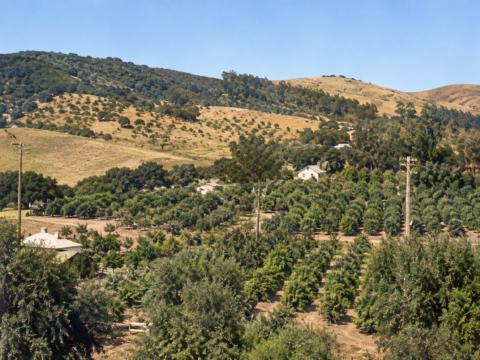
Before Carlmont High School — The Bourdette ranch and orchard, looking north. The Bourdette family home once stood on the property where Carlmont High School is located today. Courtesy of the Belmont Historical Society.

Carlmont High School began on former Belmont ranchland and opened its campus in 1953. Here’s how San Carlos and Belmont became “Carlmont”—and why its students became the Scots.

Continue reading

Before the Railroad: When Stagecoaches Connected Belmont to the Peninsula

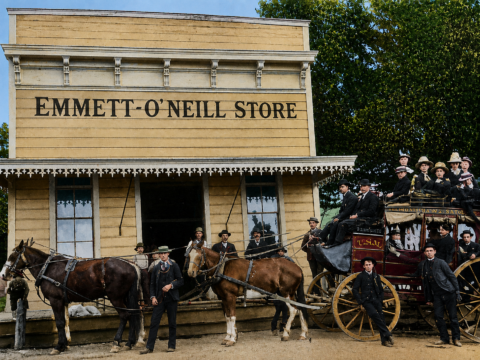
Historic stagecoach at the Emmett-O’Neill Store in Belmont, California, before railroad travel transformed the Peninsula

Before the trains came to Belmont, there was the stagecoach.
Long before commuters waited for trains, Belmont residents and travelers relied on horse-drawn coaches to carry passengers and even the U.S. Mail. Take a trip back to the early 1850s and the days when the Emmett-O’Neill Store at Ralston Avenue and Old County Road was a regular stagecoach stop.

Continue reading

Belmont’s First School: From 17 Students to a Growing Town

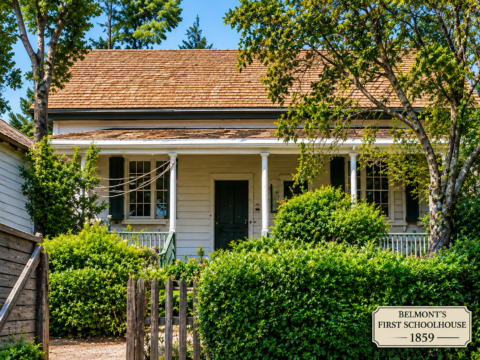
Belmont’s First Schoolhouse – Historic Belmont, California

Belmont’s first students attended class in a local resident’s home. From a one-room schoolhouse and $50-a-month teacher to dead frogs in the well, discover what going to school was like in early Belmont.

Continue reading

Waltermire Avenue: The Man Who Helped Build Belmont’s First Downtown

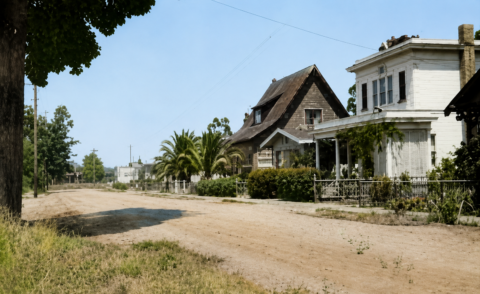
Most Belmont residents drive Waltermire Avenue without knowing the story behind the name. Discover how Edward Waltermire helped build Belmont’s first business district, operated the historic Belmont Hotel, and shaped the community before Belmont became a city.

Continue reading

As Belmont Celebrates 100 Years, the Ghosts of Its Past Still Remain

The Ghosts of Belmont: A Lost Golf Course, a Round Tower, and the Men Who Left Their Names Behind

Have you ever driven through Belmont and wondered who the people behind the street names were?

Not just wondered briefly, but really wondered.

Who was Lyon? Why is there a Monroe Drive? Was Alameda de las Pulgas always called that? And what is the story behind that curious little round turret building that still stands along the roadway like something left behind from another century?

The answers are hiding in plain sight.

Every day, thousands of Belmont residents travel roads named after men they have never met, pass buildings whose original purpose has long been forgotten, and live atop land that once held dreams grand enough to rival the Peninsula’s most exclusive communities.

To uncover the mystery, we need to travel back a century.

A Grand Vision in the Wooded Hills

The year was 1925.

Belmont was still largely undeveloped, a collection of wooded hillsides and open land nestled between San Francisco and San Jose. Yet three men saw something more.

Arthur Lyon.

Lee Monroe.

Lawrence Miller.

Together they formed Belmont Country Club Properties and set out to create what they hoped would become one of the Peninsula’s most prestigious residential communities.

If those names sound familiar, they should.

Their names still appear on Belmont street signs today.

In fact, Mr. Lyon seems to have enjoyed a certain advantage in the naming process. Belmont eventually honored him twice, with both Lyon Avenue and Arthur Avenue preserving his place in local history.

Their plan was ambitious.

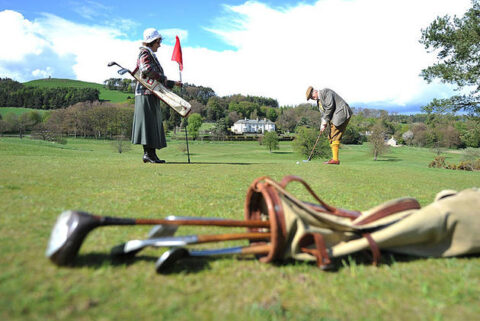
Perhaps even audacious.Imagine an elegant country club overlooking the hills, surrounded by an 18-hole golf course called Hillcrest. There would be tennis courts, handball courts, a swimming pool, a children’s wading pool, and beautifully designed homes arranged around manicured fairways.

The centerpiece would be a magnificent clubhouse named Belle Monte.

The price tag?

A staggering $65,000 in 1925.

The Round Tower Mystery

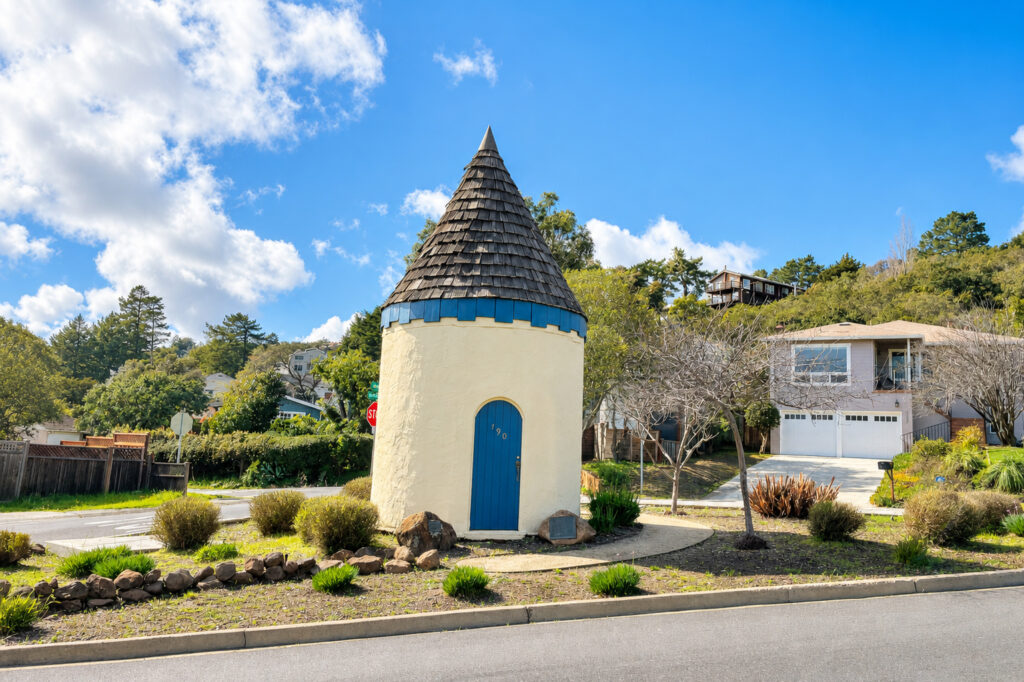
Original Real Estate Sale Office for Belle Monti

Across from the clubhouse stood an unusual little building.

Round.

Compact.

Almost whimsical.

Many Belmont residents have noticed it while driving along Alameda de las Pulgas.

Most assume it was somebody’s odd residence.

It wasn’t.

The tiny structure served as the sales office for the development.

This was where prospective buyers came to imagine their future lives among Belmont’s rolling fairways and elegant homes.

The building still survives today, quietly guarding its century-old secret while traffic rushes past.

Free Beer and Real Estate

Selling homes in the 1920s required creativity.

Or perhaps persuasion.

Belmont Country Club Properties offered free transportation from San Francisco to Belmont.

Prospective buyers would board buses, enjoy refreshments—including beer—and tour the property while salesmen painted pictures of country club living and leisurely afternoons on the golf course.

Purchase a lot and the membership in the country club was included.

For $100, residents gained access to what promised to become one of the most desirable recreational destinations on the Peninsula.

It was a marketing strategy that would probably attract attention from modern regulators.

But in the Roaring Twenties, it worked.

For a while.

The Dream Unravels

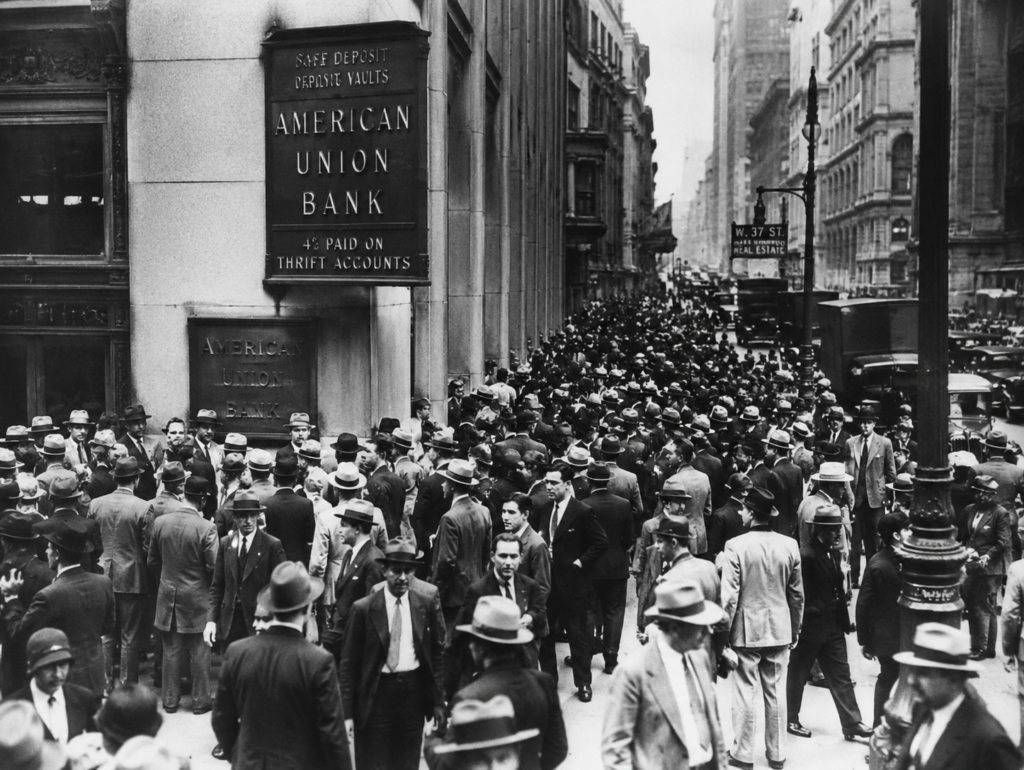
Then came 1929.

The stock market crashed.

The economy collapsed.

And Belmont’s grand experiment suddenly found itself fighting for survival.

Memberships dwindled.

Families moved away.

The developers attempted to keep the club alive by opening it to the public, but the economic forces sweeping across America proved too powerful.

The corporation eventually went bankrupt.

The dream was over.

Or so it seemed.

The Fairways Disappear

Stock Market crash of 1929

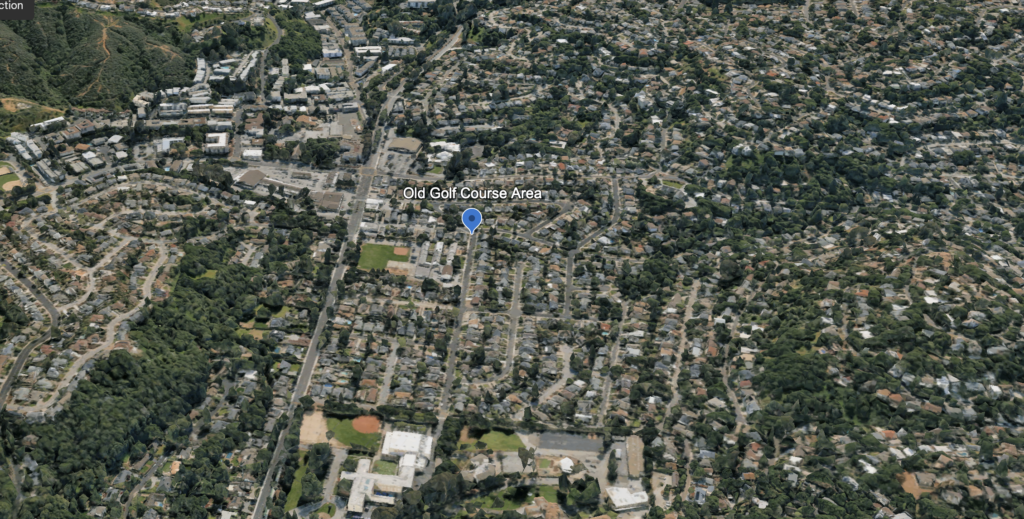
Today, Belmont residents may have no idea they are living on what was once a golf course.

Following World War II, housing was desperately needed for returning veterans and their families.

The fairways were subdivided.

Homes replaced greens.

Roads replaced cart paths.

The golf course quietly vanished beneath a growing suburb.

Yet clues remain for anyone willing to look.

Street names such as Fairway still hint at the land’s former purpose.

Several stately homes that once bordered the course still stand and are now listed on Belmont’s historic registry.

Like archaeological fragments, they are reminders of a forgotten chapter in Belmont’s story.

But if you know where to look, their fingerprints remain everywhere.

History has a way of disappearing quietly. Fairways become neighborhoods. Sales offices become curiosities. Names on street signs lose their stories. Yet Belmont’s past remains all around us for those willing to look a little closer. The next time you drive down Lyon Avenue, Monroe Drive, or past the round tower on Alameda de las Pulgas, remember that you’re passing through the remnants of a dream nearly one hundred years old.

As always, Thabnk for reading along…

Drew and Christine Morgan are experienced REALTORS and NOTARY PUBLIC located in Belmont, CA, where they own and operate MORGANHOMES, Inc. They have assisted buyers and sellers in their community for over 30 years. Drew and Christine have received the coveted Diamond award, ranking among the top 50 agents nationwide and the top 3 in Northern California by RE/MAX. To contact them, please call (650) 508.1441 or emailinfo@morganhomes.com.

For all you need to know about Belmont, subscribe to this blog right here. You can also follow us on Facebook and on X.

This article provides educational information and is intended for informational purposes only. It should not be considered real estate, tax, insurance, or legal advice; it cannot replace advice tailored to your situation. It’s always best to seek guidance from a professional familiar with your scenario.

BROKER | MANAGER | NOTARY

The Streets Around Us

Have you ever driven around Belmont and wondered how a street got its name? You might even live on a street named Lyon for example and wondered if it too is a French derivation.

How about that funny round turret of a building on Alameda de las Pulgas (now tha’s a name)—who lived there?

We’ll answer a few, but Belmont does have a historical society which is fun to visit and you’ll meet volunteers with all of the answers. There’s even a book titled Heritage of the Wooded Hills by Ria Elena MacCrisken that will satisfy some of your curiosity and make driving the windy roads of our little town more interesting. Now for some answers:

In an apparent attempt to fashion Belmont after Hillsborough, in 1925 the Belmont Country Club Properties were formed by Messrs Lee Monroe, Lawrence Miller and Arthur Lyon (apparently Mr. Lyon had more pull as both his first and last names were used for street names).

Across the street from the $65,000 club house located at 751 Alameda de las Pulgas (now the Congressional Church of Belmont) was a tiny round sales office offering homes for sale around the golf course for sale. What golf course? Find out in our here…

Drew and Christine Morgan are experienced REALTORS and NOTARY PUBLIC located in Belmont, CA where the own an operate MORGANHOMES, Inc.. They have been assisting buyers and sellers in their community for over 30 years. Drew and Christine have received the coveted Diamond award and ranked among the top 50 agents nationwide and the top 3 in Northern California by RE/MAX. To contact them, please call (650) 508.1441 or email info@morganhomes.com.

For all you need to know about Belmont, subscribe to this blog right here. You can also follow us on Facebook and on Twitter.

This article provides educational information and is intended for informational purposes only. It should not be considered real estate, tax, insurance, or legal advice, and it cannot replace advice tailored to your specific situation. It’s always best to seek guidance from a professional who is familiar with your scenario.

BROKER | MANAGER | NOTARY