
Belmont real estate has a surprisingly predictable seasonal rhythm. We looked back through years of local sales data to see when buyer competition typically peaks, when the market cools, and what that means for buyers and sellers.
Continue reading

Belmont real estate has a surprisingly predictable seasonal rhythm. We looked back through years of local sales data to see when buyer competition typically peaks, when the market cools, and what that means for buyers and sellers.
Continue reading
Finding homes online is easy. Determining whether a home is truly worth the price, understanding disclosures, identifying potential risks, and negotiating favorable terms requires experience. Learn how working with an experienced Broker can help you make informed decisions and avoid costly mistakes when buying a home.
Continue reading
Many home buyers don’t realize there’s a significant legal difference between being a client and being a customer. Understanding agency representation and fiduciary duties can help protect your interests when purchasing a home.
Continue reading
With today’s online listing sites and social media, homeowners have access to more information than ever before. Yet despite all that information, many sellers still leave money on the table—not because they don’t care, but because they don’t know what they don’t know.
After more than 30 years of helping Peninsula homeowners buy and sell real estate, we’ve found that most costly mistakes fall into five categories.
Many sellers assume buyers will overlook deferred maintenance, dated finishes, or needed repairs.
They won’t.
Buyers often overestimate the cost of repairs and discount their offers accordingly. In many cases, a modest investment in preparation can produce a far greater return when the home sells.
That’s why one of our first priorities is helping sellers determine which improvements are worth making—and which aren’t.
Buyers decide how they feel about a home within moments of walking through the front door.
Clutter, personal décor, poor lighting, and worn finishes can distract buyers from seeing the home’s true potential.
Professional staging, thoughtful preparation, and strategic presentation help buyers emotionally connect with a property, which often translates into stronger offers.
Price a home too high, and buyers may never seriously consider it. Price it too low, and you risk leaving money on the table.
The goal isn’t simply to attract attention. It’s to position the property to generate maximum interest and competition among qualified buyers.
Successful pricing requires more than looking at online estimates. It requires understanding buyer behavior, market conditions, and the subtle factors that influence value.
The highest offer isn’t always the best offer.
Financing strength, contingencies, down payment, lender quality, buyer motivation, and the likelihood of closing all matter.
We’ve seen lower offers outperform higher ones because the buyer was better qualified and the transaction was more likely to succeed.
Our job is to evaluate the entire package—not just the number at the top of the page.
Real estate transactions are often far more complex than they appear.
Negotiations, inspections, disclosures, title issues, financing, contracts, and risk management all require experience and judgment. That’s why choosing the right advisor matters.
As a California Broker, we’ve completed significantly more education, training, and experience requirements than are required for a salesperson license. More importantly, we’ve spent decades helping clients navigate the real-world challenges that arise during a transaction.
Our role isn’t simply to market your home.
It’s to protect your interests, identify potential problems before they become expensive ones, and help you make informed decisions every step of the way.
Selling a home isn’t just about finding a buyer.
It’s about preparing the property properly, pricing it strategically, negotiating effectively, and managing risk throughout the process.
That’s where experience matters.
Our mission has always been simple:
Helping People Make Good Decisions℠
And when it comes to selling one of your most valuable assets, good decisions can make all the difference.
NOTE: If you want the full list of the Best Questions Every Seller Should Ask But Don’t, simply email us at: BestQuestions@morganhomes.com

Drew and Christine Morgan are experienced REALTORS and NOTARY PUBLIC located in Belmont, CA, where they own and operate MORGANHOMES, Inc. They have assisted buyers and sellers in their community for over 30 years. Drew and Christine have received the coveted Diamond award, ranking among the top 50 agents nationwide and the top 3 in Northern California by RE/MAX. To contact them, please call (650) 508.1441 or emailinfo@morganhomes.com.
For all you need to know about Belmont, subscribe to this blog right here. You can also follow us on Facebook and on X.
This article provides educational information and is intended for informational purposes only. It should not be considered real estate, tax, insurance, or legal advice; it cannot replace advice tailored to your situation. It’s always best to seek guidance from a professional familiar with your scenario.
BROKER | MANAGER | NOTARY

Have you ever driven through Belmont and wondered who the people behind the street names were?
Not just wondered briefly, but really wondered.
Who was Lyon? Why is there a Monroe Drive? Was Alameda de las Pulgas always called that? And what is the story behind that curious little round turret building that still stands along the roadway like something left behind from another century?
The answers are hiding in plain sight.
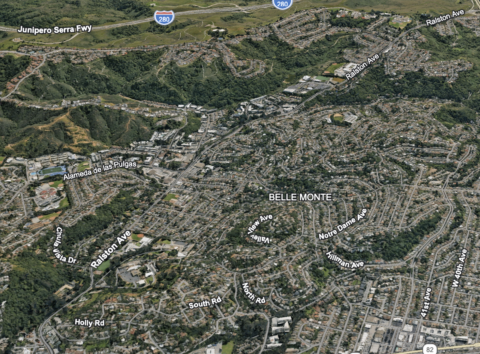
Every day, thousands of Belmont residents travel roads named after men they have never met, pass buildings whose original purpose has long been forgotten, and live atop land that once held dreams grand enough to rival the Peninsula’s most exclusive communities.
To uncover the mystery, we need to travel back a century.
A Grand Vision in the Wooded Hills
The year was 1925.
Belmont was still largely undeveloped, a collection of wooded hillsides and open land nestled between San Francisco and San Jose. Yet three men saw something more.
Arthur Lyon.
Lee Monroe.
Lawrence Miller.
Together they formed Belmont Country Club Properties and set out to create what they hoped would become one of the Peninsula’s most prestigious residential communities.
If those names sound familiar, they should.
Their names still appear on Belmont street signs today.
In fact, Mr. Lyon seems to have enjoyed a certain advantage in the naming process. Belmont eventually honored him twice, with both Lyon Avenue and Arthur Avenue preserving his place in local history.
Their plan was ambitious.
Perhaps even audacious.Imagine an elegant country club overlooking the hills, surrounded by an 18-hole golf course called Hillcrest. There would be tennis courts, handball courts, a swimming pool, a children’s wading pool, and beautifully designed homes arranged around manicured fairways.
The centerpiece would be a magnificent clubhouse named Belle Monte.
The price tag?
A staggering $65,000 in 1925.
The Round Tower Mystery
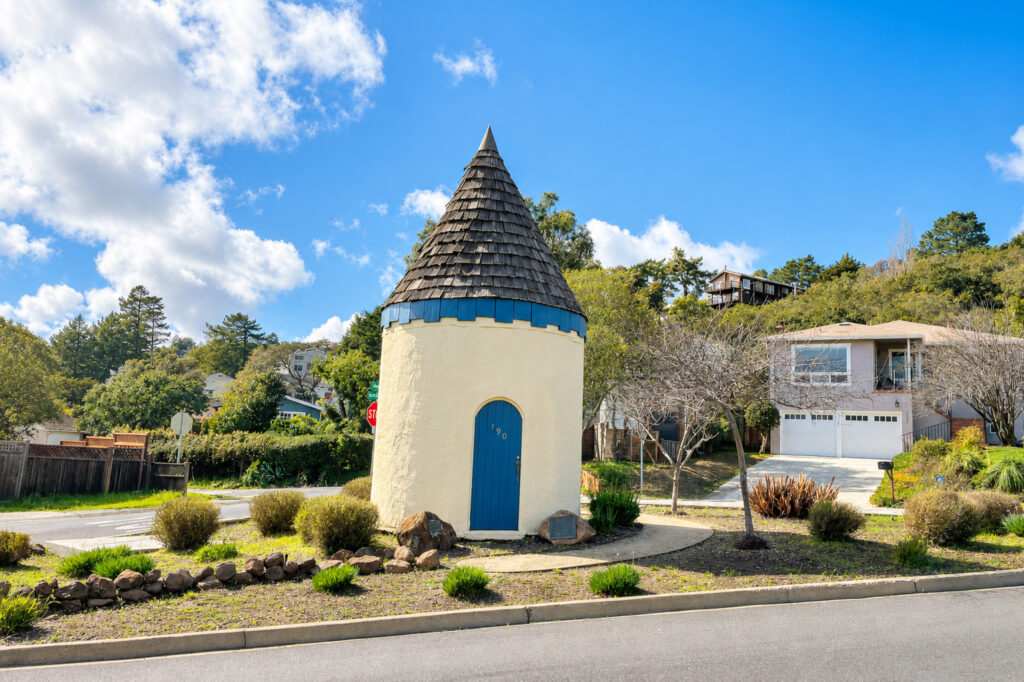
Across from the clubhouse stood an unusual little building.
Round.
Compact.
Almost whimsical.
Many Belmont residents have noticed it while driving along Alameda de las Pulgas.
Most assume it was somebody’s odd residence.
It wasn’t.
The tiny structure served as the sales office for the development.
This was where prospective buyers came to imagine their future lives among Belmont’s rolling fairways and elegant homes.
The building still survives today, quietly guarding its century-old secret while traffic rushes past.
Free Beer and Real Estate
Selling homes in the 1920s required creativity.
Or perhaps persuasion.
Belmont Country Club Properties offered free transportation from San Francisco to Belmont.
Prospective buyers would board buses, enjoy refreshments—including beer—and tour the property while salesmen painted pictures of country club living and leisurely afternoons on the golf course.
Purchase a lot and the membership in the country club was included.
For $100, residents gained access to what promised to become one of the most desirable recreational destinations on the Peninsula.
It was a marketing strategy that would probably attract attention from modern regulators.
But in the Roaring Twenties, it worked.
For a while.
The Dream Unravels
Then came 1929.
The stock market crashed.
The economy collapsed.
And Belmont’s grand experiment suddenly found itself fighting for survival.
Memberships dwindled.
Families moved away.
The developers attempted to keep the club alive by opening it to the public, but the economic forces sweeping across America proved too powerful.
The corporation eventually went bankrupt.
The dream was over.
Or so it seemed.
The Fairways Disappear

Today, Belmont residents may have no idea they are living on what was once a golf course.
Following World War II, housing was desperately needed for returning veterans and their families.
The fairways were subdivided.
Homes replaced greens.
Roads replaced cart paths.
The golf course quietly vanished beneath a growing suburb.
Yet clues remain for anyone willing to look.
Street names such as Fairway still hint at the land’s former purpose.
Several stately homes that once bordered the course still stand and are now listed on Belmont’s historic registry.
Like archaeological fragments, they are reminders of a forgotten chapter in Belmont’s story.
But if you know where to look, their fingerprints remain everywhere.
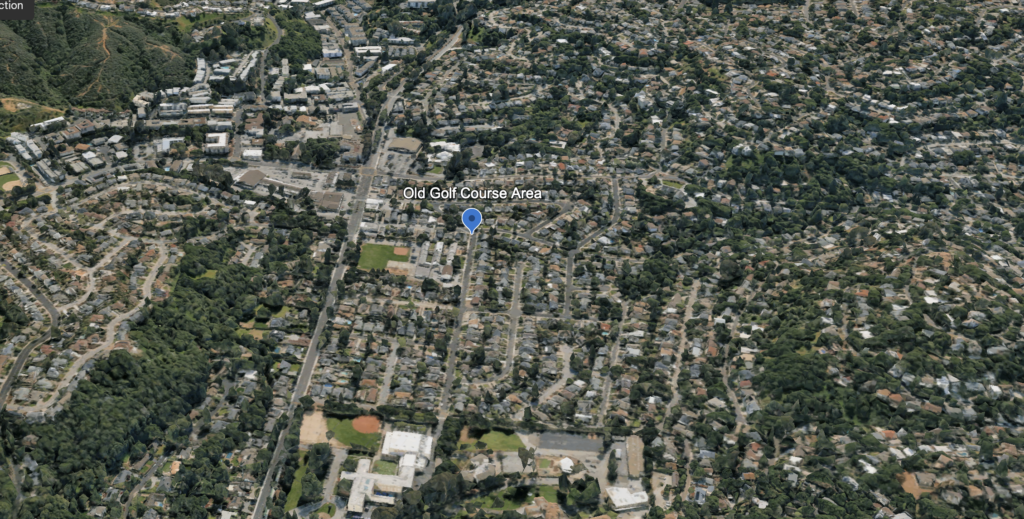
History has a way of disappearing quietly. Fairways become neighborhoods. Sales offices become curiosities. Names on street signs lose their stories. Yet Belmont’s past remains all around us for those willing to look a little closer. The next time you drive down Lyon Avenue, Monroe Drive, or past the round tower on Alameda de las Pulgas, remember that you’re passing through the remnants of a dream nearly one hundred years old.
As always, Thabnk for reading along…

Drew and Christine Morgan are experienced REALTORS and NOTARY PUBLIC located in Belmont, CA, where they own and operate MORGANHOMES, Inc. They have assisted buyers and sellers in their community for over 30 years. Drew and Christine have received the coveted Diamond award, ranking among the top 50 agents nationwide and the top 3 in Northern California by RE/MAX. To contact them, please call (650) 508.1441 or emailinfo@morganhomes.com.
For all you need to know about Belmont, subscribe to this blog right here. You can also follow us on Facebook and on X.
This article provides educational information and is intended for informational purposes only. It should not be considered real estate, tax, insurance, or legal advice; it cannot replace advice tailored to your situation. It’s always best to seek guidance from a professional familiar with your scenario.
BROKER | MANAGER | NOTARY
In Belmont real estate, not all square footage is created equal.
Many homeowners have heard the term “FAT” mentioned in conversations about hillside development, additions, or vacant land — but few fully understand what it means or how it can affect property value and future building potential.
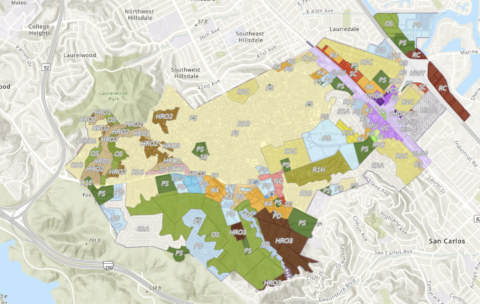
In Belmont, “FAT” stands for Floor Area Transfer — a unique zoning tool primarily associated with certain Hillside Residential and Open Space zoning districts, commonly referred to as HRO zones. The program was designed to help balance hillside preservation with reasonable residential development opportunities. Try this link to see Belmont’s interactive zoning map.
For some property owners, FAT can create valuable development opportunities. For others, it may permanently limit future expansion rights. Understanding how it works is important whether you are remodeling, purchasing vacant land, or simply evaluating your home’s long-term potential.
In simple terms, Belmont’s FAT program allows allowable building square footage to be transferred from one property to another under certain conditions.
Some hillside lots in Belmont are steep, difficult to access, environmentally sensitive, or otherwise poorly suited for development. Other nearby lots may be more practical building sites.
The FAT system was created to preserve open space and hillside character, reduce excessive grading and environmental impact, concentrate development in more suitable areas, and provide flexibility for certain homeowners.
Floor Area Transfers are most commonly associated with Belmont’s Hillside Residential and Open Space zoning districts, particularly HRO-2 areas in locations such as portions of the San Juan Canyon and Western Hills neighborhoods. Here’s a link to Belmont’s interactive zoning map,
These areas often involve steep slopes, geological considerations, limited road access, tree preservation requirements, environmental review, and complex grading constraints.
For certain properties, FAT can create meaningful value.
A homeowner who wishes to expand beyond the normally permitted floor area may potentially obtain additional square footage through a transfer arrangement, subject to City approval and zoning requirements.
Potential benefits may include larger homes in areas with restrictive base limits, greater flexibility for additions or remodels, improved long-term resale appeal, and enhanced usability of otherwise constrained parcels.
One common source of confusion involves vacant hillside parcels advertised online at prices far below typical Belmont land values.
Buyers sometimes assume these lots are bargains when, in reality, many come with substantial development limitations. Some may require additional Floor Area Transfers, extensive engineering, or may already have transferred away their development rights.
Because FAT regulations can involve zoning interpretation, planning approvals, recorded easements, geological review, and design review requirements, homeowners should consult directly with the City of Belmont Planning Department and qualified professionals before making assumptions about development potential.
In Belmont Hillside development, details matter.
Belmont’s FAT program reflects the broader balancing act that defines much of Peninsula real estate: how cities preserve neighborhood character and environmental sensitivity while still allowing homeowners reasonable flexibility and property rights.
Whether one agrees with every aspect of the system or not, Belmont’s approach has helped preserve significant portions of the city’s hillside character while allowing selective development opportunities in appropriate locations.
Real estate value is not determined by square footage alone.
In Belmont, zoning, usability, topography, and development potential can dramatically affect a property’s long-term value and possibilities.
At MorganHomes, we believe informed homeowners make better long-term real estate decisions.
And in a city as nuanced as Belmont, local knowledge matters.
Thank for reading along.
Drew and Christine Morgan are experienced REALTORS and NOTARY PUBLIC located in Belmont, CA, where they own and operate MORGANHOMES, Inc. They have assisted buyers and sellers in their community for over 30 years. Drew and Christine have received the coveted Diamond award, ranking among the top 50 agents nationwide and the top 3 in Northern California by RE/MAX. To contact them, please call (650) 508.1441 or emailinfo@morganhomes.com.
For all you need to know about Belmont, subscribe to this blog right here. You can also follow us on Facebook and on X.
This article provides educational information and is intended for informational purposes only. It should not be considered real estate, tax, insurance, or legal advice; it cannot replace advice tailored to your situation. It’s always best to seek guidance from a professional familiar with your scenario.
BROKER | MANAGER | NOTARY

In a move that has already begun circulating among local homeowners, the Belmont City Council is reportedly exploring a new proposal aimed at addressing what officials are referring to as “view equity.”
According to early discussion drafts, the concept centers around a potential “View Impact Fee” that would apply to homes benefiting from partial or panoramic views of the San Francisco Bay.
The rationale?
Properties with premium outlooks, particularly those capturing unobstructed Bay and Mt. Diablo views, are seen as receiving a “disproportionate benefit from shared natural resources.”
How It Would Work
While still in the exploratory phase, the proposal outlines a tiered structure:
Annual fees would reportedly scale based on view classification, with funds allocated toward:
The “View Equity” Argument
A council subcommittee is said to be evaluating how to “balance access to scenic resources” across neighborhoods.
One early draft reportedly states:
“While views are inherently tied to location and topography, the broader community contributes to the preservation and desirability of these assets.”
What This Could Mean for Homeowners
Although no formal vote has been scheduled, the concept has already sparked quiet conversations—particularly among homeowners in Belmont’s hill neighborhoods, where views are a defining feature of property value.
Some are questioning how views would be measured, how frequently classifications would be reassessed, and whether improvements (such as tree trimming or second-story additions) could impact a home’s “view tier.”
Early Takeaway
At this stage, the proposal remains informal and under review. However, it highlights an ongoing theme in Peninsula communities—how to balance property rights, natural assets, and neighborhood equity.
Oh, and Happy April Fool’s day neighbors…😉
All the Best,

About the Authors
Drew and Christine Morgan are the founders of MorganHomes, their independent brokerage based in Belmont. They also maintain a strategic affiliation with RE/MAX GOLD, combining the flexibility of an independent firm with the resources of one of the largest real estate networks.
As longtime Belmont residents and real estate professionals with more than 30 years of experience, they have helped generations of local families buy, sell, and make smart real estate decisions. Drew is also a Notary Public, providing additional convenience and support for clients when it matters most.
Their consistent performance has earned them RE/MAX’s prestigious Diamond Award, placing them among the top agents nationwide and among the top performers in Northern California.
If you have questions about the Belmont market or would like to discuss your situation, you can reach them at (650) 508-1441 or info@morganhomes.com.
For ongoing insights about Belmont real estate, local market trends, and community updates, you can subscribe to this blog or follow MorganHomes on Facebook and X.
Disclaimer
This article is provided for educational and informational purposes only. It is not intended as real estate, legal, tax, or insurance advice. Because every situation is unique, we recommend consulting with a qualified professional, like us, to understand your specific circumstances.
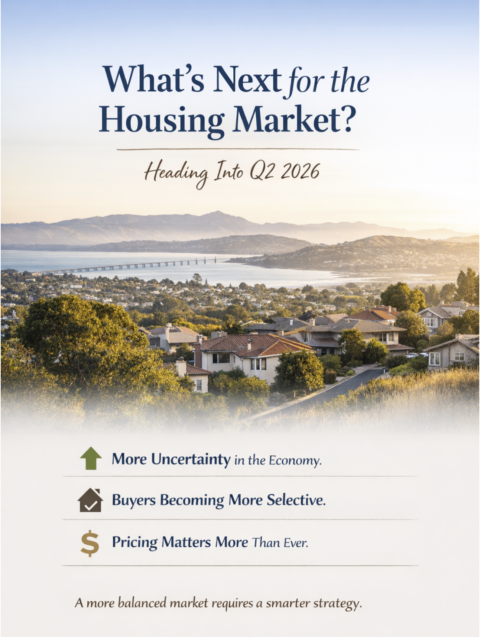
As we move into the second quarter of 2026, we’ve been getting a lot of the same question:
The honest answer is—no one can predict it with certainty. But we can look at patterns, buyer behavior, and what we’re seeing on the ground to get a pretty good sense of where things are headed.
There’s a lot going on right now that’s influencing how people feel about making big decisions:
Any one of these on its own doesn’t change the market much.
But when they all show up at once, people tend to take a step back.
In times like this, most buyers don’t panic—they pause.
Instead of rushing in, they take more of a “wait and see” approach:
In other words, the most aggressive buyers start to step back first.
So what does that look like in real life?
You’ll likely see fewer bidding wars.
Instead of 10–15 offers, it may be more like:
At the same time, buyers become more selective.
Homes that are:
…are still going to do well.
Homes with trade-offs—or pricing that feels a little too aggressive—may take longer to sell.
And overall, price growth tends to slow.
Not necessarily decline dramatically—but level off or adjust modestly.
There’s also another dynamic worth mentioning.
In uncertain times, some buyers actually lean into real estate.
They’re looking for:
But even these buyers tend to be more thoughtful.
They’re not the ones overpaying—they’re looking for value.
The Bay Area has always had some built-in support:
That doesn’t make it immune to change—but it does tend to prevent more dramatic swings.

If current trends continue, the most likely scenario is a more balanced, selective market.
The margin for error just gets smaller.
For sellers, this doesn’t eliminate opportunity—it just changes the approach.
The homes that are performing best right now are the ones that:
Where we’re seeing challenges is when homes:
That’s where momentum can get lost.
The housing market isn’t disappearing—it’s becoming more disciplined.
And in markets like this, the difference between an average result and a strong one usually comes down to:
strategy, positioning, and timing.
Frequently Asked Questions
Why are homes getting fewer offers?
Is the Bay Area housing market slowing down in 2026?
Are home prices expected to drop?
Is now a good time to sell in Belmont?
Drew and Christine Morgan are experienced REALTORS and NOTARY PUBLIC located in Belmont, CA, where they own and operate MORGANHOMES, Inc. They have assisted buyers and sellers in their community for over 30 years. Drew and Christine have received the coveted Diamond award, ranking among the top 50 agents nationwide and the top 3 in Northern California by RE/MAX. To contact them, please call (650) 508.1441 or emailinfo@morganhomes.com.
For all you need to know about Belmont, subscribe to this blog right here. You can also follow us on Facebook and on X.
This article provides educational information and is intended for informational purposes only. It should not be considered real estate, tax, insurance, or legal advice; it cannot replace advice tailored to your situation. It’s always best to seek guidance from a professional familiar with your scenario.
BROKER OWNER | MANAGER | NOTARY

Inherited Home in California under proposition 19? Recently, we were contacted by two families who had inherited their parents’ homes after the passing of the surviving parent. Unfortunately, in both situations, they had not spoken with a real estate professional beforehand, and it appears their attorney may not have been fully up to date on the newer rules.
Both families intended to move into the homes they inherited. However, because certain steps required under California’s Proposition 19 were not completed in time, the properties were reassessed to the current market value for property tax purposes.
As a result, these families—who otherwise would have been able to move into their parents’ homes and retain a much lower tax base—are now facing significantly higher property taxes. In some cases, increases like this can be financially overwhelming, leaving heirs with the difficult choice of either paying the new, higher property tax or selling the property despite wishing to reside in the home.
We felt this was important enough to bring to people’s attention, as these rules can have a major impact on families inheriting property in California. Understanding the requirements ahead of time can help prevent costly surprises and ensure that the available benefits are preserved.
How Proposition 19 Affects Children Inheriting Their Parents’ Property
California’s Proposition 19 significantly changed how property taxes are handled when children inherit real estate from their parents.
For decades under Proposition 58, children could inherit property and keep the parent’s low property tax base—even if the home became a rental or second home. Proposition 19 narrowed those rules considerably.
If a child inherits a parent’s home, the property tax base can only be preserved if three conditions are met:
1. The home must become the child’s primary residence.
The child must move into the property and claim the Homeowners’ Exemption. If the home is kept as a rental, second home, or investment property, it will generally be reassessed to current market value.
2. The tax base transfer now has a limit.
The inherited property can keep the parent’s tax base only up to $1,000,000 above the parent’s assessed value. If the home’s market value exceeds that threshold, the amount above the limit is added to the property’s taxable value.
3. The claim must be filed within one year.
The heir must file the parent-child exclusion claim with the county assessor within one year of the transfer (usually the date of death). If this deadline is missed, the property may be reassessed to the current market value, which can significantly increase the property taxes.
➡︎ This is where many people make costly mistakes. Some heirs never file the claim at all, others miss the one-year deadline, and many confuse it with the two-year window that applies when homeowners transfer their own tax base to a replacement home (see that rule below), under Proposition 19. Understanding the difference is critical to preserving the lower property tax base.
Why This Matters
Many California homeowners purchased their homes decades ago, meaning their taxable value may be far below current market prices. Under Proposition 19, heirs must now decide whether to move into the property, sell it, or accept a potentially large increase in property taxes.
For families planning estates—or for heirs inheriting property—understanding these rules is critical to avoiding unexpected tax consequences.
✓ Carrying Your Property Tax Base to a New Home [Here’s an online calculator]
Another important provision of Proposition 19 allows certain homeowners to transfer their existing property tax base to a new home when they sell their current one.
Homeowners who are 55 or older, severely disabled, or victims of a natural disaster may transfer the taxable value of their current residence to a replacement home anywhere in California. This can significantly reduce property taxes when downsizing or relocating.
To qualify, the replacement home must be purchased or newly constructed within two years of selling the original property.
After purchasing the replacement property, the homeowner should file the Base Year Value Transfer Claim with the county assessor. While the claim can typically be filed up to three years after purchasing the replacement home, filing sooner ensures the tax benefit is applied from the beginning of ownership.
Understanding these timing rules can help homeowners preserve substantial property tax savings when moving to a new home.
Proposition 19 has introduced rules that many families are still learning about—often after the fact. As we’ve seen recently, missing a deadline or not understanding the requirements can lead to property tax increases that could have been avoided with a little planning.
If you or someone in your family may be inheriting a property, or if you are considering selling and transferring your tax base to another home, taking a few minutes to understand the rules ahead of time can make a meaningful difference. If we can ever be a resource to help clarify how these changes may affect you, we are always happy to help.

Other Articles:
About the Authors
Drew and Christine Morgan are the founders of MorganHomes, their independent brokerage based in Belmont. They also maintain a strategic affiliation with RE/MAX GOLD, combining the flexibility of an independent firm with the resources of one of the largest real estate networks.
As longtime Belmont residents and real estate professionals with more than 30 years of experience, they have helped generations of local families buy, sell, and make smart real estate decisions. Drew is also a Notary Public, providing additional convenience and support for clients when it matters most.
Their consistent performance has earned them RE/MAX’s prestigious Diamond Award, placing them among the top agents nationwide and among the top performers in Northern California.
If you have questions about the Belmont market or would like to discuss your situation, you can reach them at (650) 508-1441 or info@morganhomes.com.
For ongoing insights about Belmont real estate, local market trends, and community updates, you can subscribe to this blog or follow MorganHomes on Facebook and X.
Disclaimer
This article is provided for educational and informational purposes only. It is not intended as real estate, legal, tax, or insurance advice. Because every situation is unique, we recommend consulting with a qualified professional, like us, to understand your specific circumstances.
Belmont Housing Market: A Little More Choice — But Still Moving Fast
We’re about two-thirds of the way through the first quarter of 2026, and the early read on the Belmont housing market is coming into focus.
Inventory has opened up modestly. So far this year, 39 homes have come to market, compared with 34 during the same period last year — about a 15% increase. Currently, there are 31 properties in the pipeline, including 19 active listings available to buyers and another 10 “coming soon” homes preparing to enter the market. Eight properties are already pending.
At first glance, the increase in listings appears to be good news for buyers. And to a degree, it is — there are slightly more choices than there were a year ago.
But the market’s pace tells a more important story.
Homes that are going pending are averaging just nine days on the market. That’s a clear signal that new inventory is being absorbed quickly. In fact, the buyers we’ve represented this year have still found themselves in highly competitive situations. On the last two homes we pursued, each drew roughly 15 offers.

That combination — more listings, but very fast absorption — suggests that demand remains strong and pricing pressure is holding firm. If the market were softening, we would expect to see homes sitting on the market longer, more price reductions, and fewer competing offers. So far, none of those conditions are showing up in the data.
It’s still early, and there haven’t been enough closed sales yet to draw firm conclusions about pricing trends for 2026. But the early indicators point to a market that remains still seller-leaning, with motivated buyers acting quickly when well-prepared homes come to market.
The takeaway: Belmont buyers may have a few more options this year — but the window to act is still short, and competition hasn’t gone away.
What this means for you depends on your timing and your strategy.
If you’re thinking about buying or selling in Belmont this year, the early trends suggest preparation and positioning matter more than ever. Sellers need to price and present their homes correctly to capture today’s fast-moving demand, and buyers need a clear plan to compete when the right property appears. If you’d like a quick, no-pressure review of your home’s current value, or a strategy session to understand your options in today’s market, feel free to reach out. We’re always happy to share what we’re seeing locally and help you make informed decisions about your next move.
About the Authors
Drew and Christine Morgan are the founders of MorganHomes, their independent brokerage based in Belmont. They also maintain a strategic affiliation with RE/MAX GOLD, combining the flexibility of an independent firm with the resources of one of the largest real estate networks.
As longtime Belmont residents and real estate professionals with more than 30 years of experience, they have helped generations of local families buy, sell, and make smart real estate decisions. Drew is also a Notary Public, providing additional convenience and support for clients when it matters most.
Their consistent performance has earned them RE/MAX’s prestigious Diamond Award, placing them among the top agents nationwide and among the top performers in Northern California.
If you have questions about the Belmont market or would like to discuss your situation, you can reach them at (650) 508-1441 or info@morganhomes.com.
For ongoing insights about Belmont real estate, local market trends, and community updates, you can subscribe to this blog or follow MorganHomes on Facebook and X.
Disclaimer
This article is provided for educational and informational purposes only. It is not intended as real estate, legal, tax, or insurance advice. Because every situation is unique, we recommend consulting with a qualified professional, like us, to understand your specific circumstances.
MorganHomes
Broker | REALTORS | Notary
DRE#01124318 | 01174047