
Long before Ralston Hall was built, Count Leonetto Cipriani established one of Belmont’s earliest estates. Discover how this Italian patriot helped shape local history and why Cipriani Boulevard proudly bears his name.
Continue reading

Long before Ralston Hall was built, Count Leonetto Cipriani established one of Belmont’s earliest estates. Discover how this Italian patriot helped shape local history and why Cipriani Boulevard proudly bears his name.
Continue reading
Finding homes online is easy. Determining whether a home is truly worth the price, understanding disclosures, identifying potential risks, and negotiating favorable terms requires experience. Learn how working with an experienced Broker can help you make informed decisions and avoid costly mistakes when buying a home.
Continue reading
Understanding Market Value vs. Asking Price
How is One to Know What a Home Is Really Worth?
One of the biggest mistakes home buyers make is assuming a home’s asking price is the same as its market value.
In reality, the asking price is simply the price a seller chooses to advertise. Market value, on the other hand, is what a knowledgeable and willing buyer is likely to pay in the current market.
Understanding the difference can help you avoid overpaying, missing opportunities, or becoming frustrated when homes sell for more—or less—than their asking prices.
What Is an Asking Price?
The asking price is the amount a seller places on a property when it is offered for sale.
Think of it as an invitation to the marketplace rather than a statement of value.
A seller may choose an asking price based on:
The asking price may be higher, lower, or very close to the property’s actual market value.
What Is Market Value?
Market value is the price a buyer and seller agree upon when neither is under pressure and both have reasonable knowledge of the market.
In simple terms, market value is what the market is willing to pay today.
Market value is influenced by:
Because these factors constantly change, market value changes as well.
Why Do Some Homes Sell Above Asking Price?
In competitive markets such as Belmont, it’s common to see homes sell above the advertised price.
This usually occurs because the seller intentionally priced the home below market value to attract more buyers and generate competition.
For example:
A Belmont home may be listed for $1,998,000.
After receiving multiple offers, it may ultimately sell for $2,250,000.
Did the home increase in value overnight?
No.
The asking price was simply part of the seller’s marketing strategy.
Why Do Some Homes Sell Below Asking Price?
The opposite can happen as well.
A seller may overestimate the property’s value or list the home aggressively to test the market.
If buyers believe the asking price exceeds market value, the home may sit on the market and eventually sell for less.
For example:
A home may be listed at $2,500,000.
After several price reductions and limited buyer interest, it may sell for $2,250,000.
In this case, the market—not the seller—determined the property’s value.
Online Estimates Are Only Estimates
Many buyers begin their search using online valuation tools.
While these estimates can provide a rough starting point, they often fail to account for important factors such as:
Two homes with identical square footage may differ in value by hundreds of thousands of dollars.
Online estimates simply cannot evaluate every factor that influences market value.
How Real Estate Professionals Determine Market Value
The most reliable way to estimate value is by analyzing recent comparable sales.
These are homes that are similar in:
A professional market analysis also considers:
This process provides a much clearer picture of value than relying solely on the asking price.
The Belmont Example
Suppose two nearly identical homes are listed in Belmont.
Home A is listed at $1,995,000.
Home B is listed at $2,295,000.
Most buyers assume Home B is worth more.
However, after reviewing recent comparable sales, both homes may have a market value closer to $2,200,000.
One seller chose an aggressive pricing strategy designed to attract multiple offers.
The other seller chose a higher list price hoping to negotiate downward.
Different asking prices.
Similar market value.
The Most Important Number Isn’t the Asking Price
When evaluating a home, buyers often focus on the list price.
Experienced buyers focus on value.
The real questions are:
Answering those questions will tell you far more about value than the asking price alone.
How We Help Buyers Determine Value
One of our most important responsibilities is helping buyers understand what a property is actually worth before they write an offer.
We analyze comparable sales, market trends, inventory levels, buyer demand, and the unique characteristics of each property to help our clients make informed decisions. We’re constantly viewing homes before they sell to make ourselves acutely aware of what the market value should be, not necessarily what it will be.
The goal isn’t simply to win the home.
The goal is to help you make a good decision.
Because understanding market value is one of the best ways to buy with confidence and avoid costly mistakes.
Understanding what a home is truly worth is one of the most important services we provide. As the Broker of Record for MORGANHOMES, Inc., Drew has extensive training in property valuation and market analysis beyond that required of a typical real estate salesperson. Combined with Christine’s experience as a former appraiser, our clients benefit from a unique depth of expertise when determining a home’s value, developing pricing strategies, and making informed real estate decisions.

FAQ Section
Drew and Christine Morgan are experienced REALTORS and NOTARY PUBLIC located in Belmont, CA, where they own and operate MORGANHOMES, Inc. They have assisted buyers and sellers in their community for over 30 years. Drew and Christine have received the coveted Diamond award, ranking among the top 50 agents nationwide and the top 3 in Northern California by RE/MAX. To contact them, please call (650) 508.1441 or emailinfo@morganhomes.com.
For all you need to know about Belmont, subscribe to this blog right here. You can also follow us on Facebook and on X.
This article provides educational information and is intended for informational purposes only. It should not be considered real estate, tax, insurance, or legal advice; it cannot replace advice tailored to your situation. It’s always best to seek guidance from a professional familiar with your scenario.
BROKER | MANAGER | NOTARY
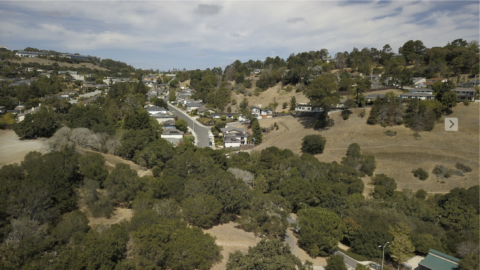
How much money do you really need to buy a home in Belmont? Using the current median home price of $2.2 million, we break down common down payment options, closing costs, and total cash needed so buyers can plan with confidence.
Continue reading
Many buyers focus only on the mortgage payment, but the true cost of homeownership includes much more. Learn how PITI, property taxes, insurance, HOA fees, maintenance, and impounds affect your monthly housing costs.
Continue reading
Many home buyers don’t realize there’s a significant legal difference between being a client and being a customer. Understanding agency representation and fiduciary duties can help protect your interests when purchasing a home.
Continue reading
Congratulations—your offer has been accepted! But what happens next? Learn how escrow works and follow the step-by-step process from depositing your earnest money deposit through receiving the keys to your new home.
Continue reading
With today’s online listing sites and social media, homeowners have access to more information than ever before. Yet despite all that information, many sellers still leave money on the table—not because they don’t care, but because they don’t know what they don’t know.
After more than 30 years of helping Peninsula homeowners buy and sell real estate, we’ve found that most costly mistakes fall into five categories.
Many sellers assume buyers will overlook deferred maintenance, dated finishes, or needed repairs.
They won’t.
Buyers often overestimate the cost of repairs and discount their offers accordingly. In many cases, a modest investment in preparation can produce a far greater return when the home sells.
That’s why one of our first priorities is helping sellers determine which improvements are worth making—and which aren’t.
Buyers decide how they feel about a home within moments of walking through the front door.
Clutter, personal décor, poor lighting, and worn finishes can distract buyers from seeing the home’s true potential.
Professional staging, thoughtful preparation, and strategic presentation help buyers emotionally connect with a property, which often translates into stronger offers.
Price a home too high, and buyers may never seriously consider it. Price it too low, and you risk leaving money on the table.
The goal isn’t simply to attract attention. It’s to position the property to generate maximum interest and competition among qualified buyers.
Successful pricing requires more than looking at online estimates. It requires understanding buyer behavior, market conditions, and the subtle factors that influence value.
The highest offer isn’t always the best offer.
Financing strength, contingencies, down payment, lender quality, buyer motivation, and the likelihood of closing all matter.
We’ve seen lower offers outperform higher ones because the buyer was better qualified and the transaction was more likely to succeed.
Our job is to evaluate the entire package—not just the number at the top of the page.
Real estate transactions are often far more complex than they appear.
Negotiations, inspections, disclosures, title issues, financing, contracts, and risk management all require experience and judgment. That’s why choosing the right advisor matters.
As a California Broker, we’ve completed significantly more education, training, and experience requirements than are required for a salesperson license. More importantly, we’ve spent decades helping clients navigate the real-world challenges that arise during a transaction.
Our role isn’t simply to market your home.
It’s to protect your interests, identify potential problems before they become expensive ones, and help you make informed decisions every step of the way.
Selling a home isn’t just about finding a buyer.
It’s about preparing the property properly, pricing it strategically, negotiating effectively, and managing risk throughout the process.
That’s where experience matters.
Our mission has always been simple:
Helping People Make Good Decisions℠
And when it comes to selling one of your most valuable assets, good decisions can make all the difference.
NOTE: If you want the full list of the Best Questions Every Seller Should Ask But Don’t, simply email us at: BestQuestions@morganhomes.com

Drew and Christine Morgan are experienced REALTORS and NOTARY PUBLIC located in Belmont, CA, where they own and operate MORGANHOMES, Inc. They have assisted buyers and sellers in their community for over 30 years. Drew and Christine have received the coveted Diamond award, ranking among the top 50 agents nationwide and the top 3 in Northern California by RE/MAX. To contact them, please call (650) 508.1441 or emailinfo@morganhomes.com.
For all you need to know about Belmont, subscribe to this blog right here. You can also follow us on Facebook and on X.
This article provides educational information and is intended for informational purposes only. It should not be considered real estate, tax, insurance, or legal advice; it cannot replace advice tailored to your situation. It’s always best to seek guidance from a professional familiar with your scenario.
BROKER | MANAGER | NOTARY

Buying a home is one of the largest financial decisions you’ll ever make. Discover five practical strategies that can help you make smarter decisions, avoid common pitfalls, and navigate the home-buying process with confidence.
Continue reading
Most Belmont residents drive Waltermire Avenue without knowing the story behind the name. Discover how Edward Waltermire helped build Belmont’s first business district, operated the historic Belmont Hotel, and shaped the community before Belmont became a city.
Continue reading