Fed Interest Rate Hikes and Your Mortgage

By now you’ve probably heard that interest rates will soon be rising. The media reports simple sound bites such as, “Interest Rates Rise” which is of little help in understanding to which interest rates they are referring—credit card debt, student loan, small business loans or home loans?

Why are the Feds Raising Rates and What will it Mean?

The Federal Reserve rate making the news is set by the Federal Open Market Committee, which is part of the Federal Reserve. It is used as part of a monetary policy to attempt to help smooth the inevitable business cycles that the economy experiences. 

When we hear “The Feds are going to raise rates”, it’s important to note that specific change to the Federal Reserve overnight rate affects adjustable-rate mortgages. One must also watch Treasury Notes and Bonds for volatility in fixed rate mortgages.

The Federal Reserve keeping interest rates low helped us all through the 2007-2009 recession and again was employed during the Pandemic to help keep the economy from wild market force swings.

After the housing bubble burst in 2007, conforming loans actually had higher interest rates due to their greater propensity for default, while Jumbo loans enjoyed smaller rates of default as they were often tired to a properties with more equity.

But the Fed needs room to maneuver and raising the rate to more normal levels gives them some ammo in their arsenal in the event they need to employ their interest rate weapon again.

Since the attack on Ukraine, the feds have already signaled that they will slow any rate hikes this year for fear of stalling the economy. Once they begin raising rates it will serve to slow down the current high inflation by dampening spending.

This is a good illustration of how the Feds use this tool during recessions to stimulate or suppress the economy.

What Effect Interest Rate Hikes will have on Home Loans?

As we discussed in an earlier blog,  the Federal Reserve rate—does not necessarily mean home loans will follow suit—though some often do. 

  • The 10 year Note (typically affects 15 year fixed rate mortgages)
  • The 30 year Bond (typically affects 30 year fixed rates)
  • The Federal Funds Rate (affects Adjustable Mortgage rates)

As interest rates on Treasury notes rise, banks can raise the interest rates on new fixed rate mortgages. That means home buyers will have to pay more each month for a loan which in turn takes away purchasing power. Typically, when interest rates rise, home prices fall. When housing prices fall, the economy slows.

One of the rates most often discussed is the 10-year note. This frequently serves as a benchmark for setting long-term rates like commercial and residential mortgages. This rate is not directly set by the government. It is determined by market forces, often as simple as supply and demand.

Although today’s rates aren’t crazy by historical standards, they are higher than they have been in years, and that’s likely to have a small effect in the housing market — though we don’t see housing prices to declining significantly.

More than a decade of chronic underbuilding and millions of millennials moving into the homebuying stage of life has created a significant imbalance between housing supply and demand,” McBride from Bank Rate said.“While rapidly rising mortgage rates may temper the demand somewhat, don’t expect home price appreciation to come to a halt. A more modest pace of appreciation is the likelier outcome.

More About Mortgages

Conventional mortgages fall into two main categories: “conforming” and “nonconforming” loans.

Conforming loans are home loans that are purchased by government entities such as Fanny Mae and Freddie Mac and must meet their guidelines such as the amount of down payment. These organizations make the access to more mortgage loans available. These tend to be smaller loans.

The Federal Housing Finance Agency (FHFA) raised the 2022 Conforming loan limits in California. This allows some mortgage loans that were previously labeled “Jumbo” to now be placed in the Conforming loan limit category. Conforming loans in California generally come with better mortgage rates and easier underwriting requirements.

A ”Jumbo” loan is considered a non-conforming loan, when it is in excess of the loan limits allowed for a conforming loan. 

What Are The 2022 Conforming Loan Limits in the Bay Area?

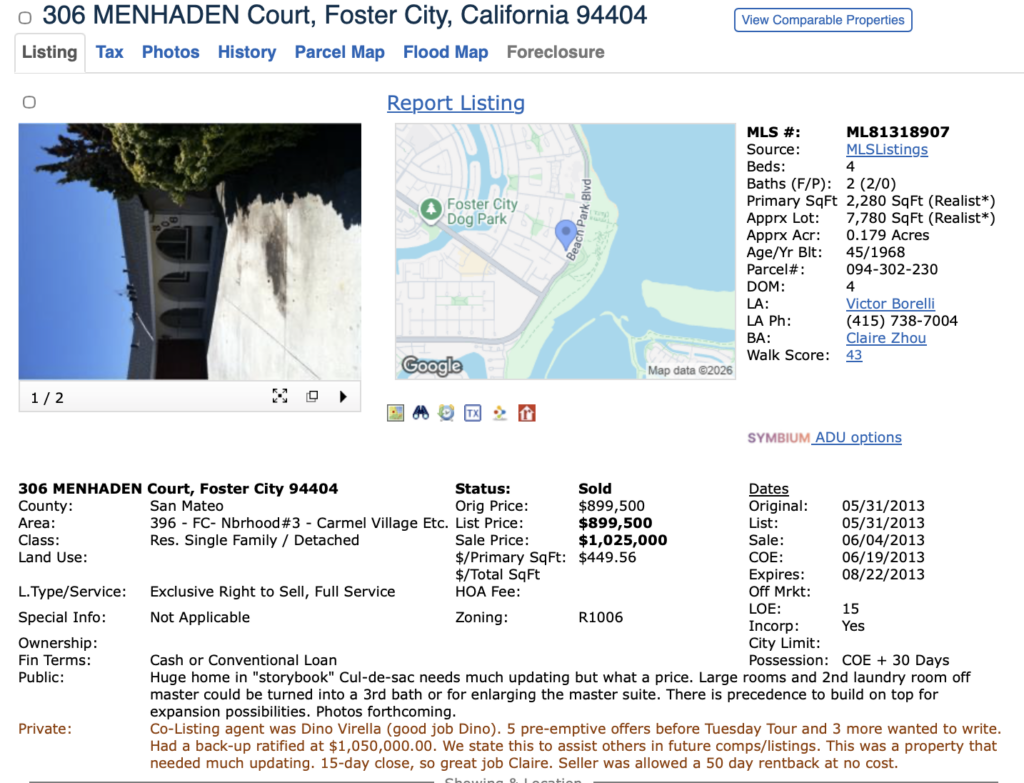
San Francisco, San Mateo & Santa Clara all have the highest limits available—$970,800 for a conforming loan.

What Does this Mean for You?

If you’re a homeowner thinking of selling, higher rates could impact the amount buyers can overbid for your home, as higher rates impact purchasing power.

If you’re a buyer, it means money will cost you more going forward so finding a home sooner rather than later could save you thousands of dollars. Every time there’s a tick up in interest rates buyers get more anxious about completing a purchase—so expect more short-term competition.

Our belief is that a modest rise in the fed rate will have a nominal effect on interest rates, but since lenders can react in any way they choose, all bets are off to definitively say how the upcoming rate hikes will impact our local housing market.

Drew & Christine Morgan are REALTORS/NOTARY PUBLIC in Belmont, CA. with more than 25 years of experience in helping sellers and buyers in their community. As Diamond recipients, Drew and Christine are ranked in the top 50 RE/MAX agents nationwide and the top 3 in Northern California.  They may be reached at (650) 508.1441 or emailed at info@morganhomes.com.

For all you need to know about Belmont, subscribe to this blog right here. You can also follow us on Facebook at https://www.facebook.com/Morganhomes and on Twitter @ https://twitter.com/morganhomes

The information contained in this article is educational and intended for informational purposes only. It does not constitute real estate, tax, insurance or legal advice, nor does it substitute for advice specific to your situation. Always consult an appropriate professional familiar with your scenario.

A LOOK AT 2021 HOUSING AND WHAT LIES AHEAD IN 2022

Unless you’ve been living under a rock the past two years, you’ve no doubt heard that home values climbed their assent into the stratosphere.

Stratosphere

But as local agents for over 25 years, even we have a hard time wrapping our heads around the staggering numbers.

You may have also heard that there’s “no inventory”. Well, that’s not exactly true.

Then what’s causing the spike in prices? High demand, not lack of supply—unlike the overall economy that’s suffering from a lack of supply and high demand.

Comparing the annual number for 2020 to 2021, we’ll start with the inventory of homes for sale.

The number of new listings that came on the market in 2020 was 234 in 2020 and 249 in 2021 which is an increase of 6.4% more homes available for sale in 2021. Then why is everyone talking about low inventory? Because sales went from 183 units in 2020 to 254 in 2021—a whopping 38% increase—so there are no homes left to buy.

One might ponder, “How can that be?” If you only have an increase of 6.4% in new listings, how can you have 38% more sales. The answer is everything is selling in 2021 while in 2020 some of those new listings never made it into escrow.

That’s evident in the days on market, which dropped 45%, from 20 days to only 11, and the percent a seller received over the asking price climbed from 105% in 2020 to 114% in 2021. 

Another indicator of the scant number of homes available at any given moment is the “Months of Inventory” statistic, that measures how long it would take to sell all of the available inventory at the current rate of sales. That dropped from a meager .4 months, to an almost immeasurable .1 month, (overall, the U.S. stands at around six months of inventory at any given time).

What effect did this have on home values? Nothing, but it had a lot to do with home prices. They hit their highest level in history recording a median home price of $2,245,000 up from $1,888,000—a 19% increase YOY and a 28% increase in the past two years—while the size of homes selling in the last two periods stayed statistically similar at 1,968 and 1,962 square feet respectively. 

This is an article we did back in 2018 on the supposed crest of interest rate hikes.

There is some cooling off of the astronomical climb in prices as noted by the Case-Shiller study for the Bay Area’s metropolitan area, but that may not reflect our local hot spot trends in the mid-peninsula.

What to Watch Out For

Rising Interest Rates

Rising interest rates may give buyers some relief from a super-heated market, may also serve to quell their purchasing power while softening prices. The irony is just when buyers may be able to compete in the market, even if they were to pay less for a home, they’ll end up paying more in interest in their loans.

Drew & Christine Morgan are REALTORS/NOTARY PUBLIC in Belmont, CA. with more than 25 years of experience in helping sellers and buyers in their community. As Diamond recipients, Drew and Christine are ranked in the top 50 RE/MAX agents nationwide and the top 3 in Northern California.  They may be reached at (650) 508.1441 or emailed at info@morganhomes.com.

For all you need to know about Belmont, subscribe to this blog right here. You can also follow us on Facebook at https://www.facebook.com/Morganhomesand on Twitter @ https://twitter.com/morganhomes

The information contained in this article is educational and intended for informational purposes only. It does not constitute real estate, tax, insurance or legal advice, nor does it substitute for advice specific to your situation. Always consult an appropriate professional familiar with your scenario.

Zillow’s Inaccurate Zestimates May be Blamed for Zillow’s Own Financial Woes and Cancelling their iBuyer Program

How accurate are Zillow’s Zestimates? As it turns out, Zillow’s CEO seems to have lost faith in his companies own ability to assess home values.

Company founder and CEO Rich Barton added in his report [to investors] that “we’ve determined the unpredictability in forecasting home prices far exceeds what we anticipated and continuing to scale Zillow Offers would result in too much earnings and balance-sheet volatility.”

Rich Barton

During an earnings call with investors, Barton ultimately concluded that Zillow has been unable to accurately price homes for future sales.

Our observed error rate has been far more volatile than we thought possible,” Barton said during the call. He later added that “fundamentally we have been unable to predict future pricing of homes to a level of accuracy that makes this a safe business to be in.”

As REALTORS®, a common issue arises when representing sellers or buyers is the Zestimate®️they sometimes rely upon to determine value for the property in question.

Invariably, we spend an inordinate amount of time explaining to our buyers and sellers that the Zestimate they see on-line has very little to do with the actual market value of a home.

The problem with Zillow’s algorithm is that while it can compare the size and age of a home using public records, location and lot size, it has an impossible task of sourcing sufficient details of a home for an accurate valuation.

For example, Zillow has no way of knowing if the homes being compared have been recently updated, and if so with what quality of materials.

Are the lots these homes sit upon all the same insofar as usability? A level ¼ acre lot is worth far more than a steep ½ acre lot but Zillow’s algorithm has no access to these important details, and it can’t differentiate between the two.

To sum it up, we tell our clients, “Zillow has never been to your home, or seen the inside. They can’t possibly know what your home is really worth—but it’s a fun app”.

The sad news is Zillow has taken down their own work force by their assumption they could use their quantitative analysis to predict home values.

The report ultimately states that Zillow plans “to wind down Zillow Offers, the company’s iBuying service in which Zillow acts as the primary purchaser and seller of homes.” CEO Rich Barton went on to say that the move should take several quarters and will also result in Zillow reducing its workforce by approximately 25 percent, according to a report Tuesday. 

Quote Source: Imnan Real Estate News

Drew & Christine Morgan are REALTORS/NOTARY PUBLIC in Belmont, CA. with more than 25 years of experience in helping sellers and buyers in their community. As Diamond recipients, Drew and Christine are ranked in the top 50 RE/MAX agents nationwide and the top 3 in Northern California.  They may be reached at (650) 508.1441 or emailed at info@morganhomes.com.

For all you need to know about Belmont, subscribe to this blog right here. You can also follow us on Facebook at https://www.facebook.com/Morganhomes and on Twitter @ https://twitter.com/morganhomes

The information contained in this article is educational and intended for informational purposes only. It does not constitute real estate, tax, insurance, or legal advice, nor does it substitute for advice specific to your situation. Always consult an appropriate professional familiar with your scenario.

BELMONT HOME VALUES CONTINUE THEIR ASCENT AS SALES DECLINED

It wasn’t just Sir Richard Branson and Jeff Bezos that have shepherded in a new era. Belmont single family homes values have continued their pandemic born steep ascent.

First, the numbers:

Belmont home values continued their astronomical ascent as sales declined in September of 2021. Belmont sales of single family homes fell 9.6% from September of 2020 to the same period in 2021. Compared to September of 2019, pre-pandemic, sales were up this year more than 53% in 2021.

The average time it took to sell a home went down from 19 days to 12.

The Months of Inventory—the time it would take to sell all the homes on the market at the current rate of sales—went from .8 months down to .5, and the available inventory of homes to choose from went from 21 in 2020, to only 11 in 2021. To put this into perspective, the U.S. housing inventory sits at 6.1 months.

The median home price rose from $1,925,000 to $2,235,000, close to a 12% increase YOY. It’s important to note that the size of homes selling in these two periods went down, from 2,150 ft² to 1,737 ft², a 19% decrease, which serves to only magnify the cost to the consumer. 

The price per ft² in 2020 was $979 and increased to $1,299 in 2021. It’s typical for the price per square foot to go up when smaller homes are selling, since it does not take into consideration the lot which the homes sit upon.

What is noteworthy is while the size of homes selling in these two periods went down 19%, prices went up 12%—illustrating that for 12% more in 2021, one could only get a 19% smaller home.

The percentage sellers received also went up from 101% of the asking price in 2020 to 112% in 2021, underscoring the strong demand.

Due to the increase in home values, the cost of home ownership, while borrowing money at 3% interest, went up $1,000 per month in just the last year. If interest rates were to rise to just 4%, the median price home in Belmont would cost ~ additional $1,000 per month.  

According to Mike Farrell of Wells Fargo, a person wishing to buy the median priced Belmont home with 20% down in 2020 needed to earn ~$225,0000 a year, while in 2021 that rose to $300,000 per year. That’s assuming the borrower has no other debt, such as credit card, car payments or school loans.

For buyers with stock options, puting a larger down payment may be an option to increase their buying power without worrying about needing more income to qualify for a mortgage. But for buyers with traditional salaries—essential workers from Teachers, Police, Firefighters, and hospital workers to grocery store employees, and restaurant workers who, without help from outside wealthy family members, will have little hope of ever buying into the dream of home ownership in the Bay Area.

Unfortunately, we see the same story playing out in San Mateo County as a whole.

The most important take-aways from these numbers are the median home price, which jumped 6% YOY, while the size of homes selling were 2% smaller, and the percentage the seller received of their asking price jumped 6 percentage points from 102% of asking to 108%.

As a direct result of the pandemic, many apartment renters, and condominium owners, found to work from home—and in many cases home school children, they needed more space. Since public gatherings were off the table—they wanted a yard as well as no common areas such as elevators. This created a glut of condominiums on the market.

It goes without saying, that we are in unchartered waters in terms of housing demand. Looking at this data from Case-Shiller®️, as compiled by FRED®, which covers the San Francisco MSA (Metropolitan Statistical Area) comprised of five of the nine Bay Area Counties, one can see the dramatic spike in home values beginning in 2020.

If you have considered selling your home and would like to maximize the proceeds from your sale, please contact us for a no obligation assessment.

Drew & Christine Morgan are REALTORS/NOTARY PUBLIC in Belmont, CA. with more than 25 years of experience in helping sellers and buyers in their community. As Diamond recipients, Drew and Christine are ranked in the top 50 RE/MAX agents nationwide and the top 3 in Northern California.  They may be reached at (650) 508.1441 or emailed at info@morganhomes.com.

For all you need to know about Belmont, subscribe to this blog right here. You can also follow us on Facebook at https://www.facebook.com/Morganhomes and on Twitter @ https://twitter.com/morganhomes

The information contained in this article is educational and intended for informational purposes only. It does not constitute real estate, tax, insurance, or legal advice, nor does it substitute for advice specific to your situation. Always consult an appropriate professional familiar with your scenario.

The Forbidden Fruit is Thy Neighbor’s Tree

Do you have a neighbor that’s a nuisance? Many do, yet they may be unaware. We’re talking about nuisance trees. Say your neighbor’s tree has limbs over your fence, or the neighboring tree’s roots are damaging your driveway. What can you do about it?

The good news is you do have rights—but they’re limited. You can’t just walk on over to your neighbor’s property and start cutting the offending tree down, or roots back, as that could be trespassing. But California Civil Code 3346 does consider the encroachment of branches or roots onto your property to be a nuisance. You are allowed to trim the tree or roots from a neighboring property that are encroaching onto your land so long as that tree is not destroyed or permanently damaged. If your actions destroy your neighbors’ tree, or even cause substantial damage so that the tree’s value is impacted, you can be held liable for treble damages (three times the actual amount).

picking an Apple Tree

What about the fruit from your neighbor’s tree? This time of year your neighbor’s tree could be bursting with peaches, pears, lemons, and limes—almost falling off of the trees. Almost, being the operative word. If your neighbor has a fruit tree that overhangs your property, the fruit on the tree belongs to that of your neighbor, even if it’s on your side of the fence. Any fruit that has fallen from your neighbor’s tree onto your property is considered the fruits of your labor for picking them up. In other words, they’re all yours.

Case Law regarding trees.

The information contained in this article is educational and intended for informational purposes only. It does not constitute real estate, tax, insurance, or legal advice, nor does it substitute for advice specific to your situation. Always consult an appropriate professional familiar with your scenario.

Drew & Christine Morgan are REALTORS/NOTARY PUBLIC in Belmont, CA. with more than 25 years of experience in helping sellers and buyers in their community. As Diamond recipients, Drew and Christine are ranked in the top 50 RE/MAX agents nationwide and the top 3 in Northern California.  They may be reached at (650) 508.1441 or emailed at info@morganhomes.com.

For all you need to know about Belmont, subscribe to this blog right here. You can also follow us on Facebook at https://www.facebook.com/Morganhomes and on Twitter @ https://twitter.com/morganhomes

Critical Steps to Financial Planning

Financial planning is an integral part of any successful portfolio.

We don’t pretend to offer financial advice, but we do offer real estate advice and the two often overlap.

For example, every two years a married homeowner filing joint tax returns can sell their primary residence and enjoy the first $500,000 of capital gains tax free. We’d be remise if we didn’t remind those to whom we’ve sold homes about this option to keep more of their equity in their own pocket.

Of course, we realize that most people don’t move every two years just to save on capital gains. 

First, homes don’t appreciate that much in two years to realize the savings, and people get entrenched in their neighborhood, while others just love their house and have no plans to move, but failing to plan ahead, could cost one hundreds of thousands of dollars.

When Might One Consider this Option?

If you have lived in your home in the Bay Area for more than five years you’ve probably already surpassed the $500,000 capital gains abatement threshold. 

Are you outgrowing your home? With interest rates are still at historically low levels, now might be an ideal time to consider a move up into the space you need.

If you’re retired or near retirement and would like to downsize, selling your home while the market is at record highs might be the time to employ that exit strategy you’ve been considering.  Afterall, when the last market correction occurred it took 7 years for the median home price to return to the previous high. Seven years is a long time to postpone retirement just to wait for home prices to rebound to current levels.

Worried about higher property taxes on a larger home? The recently passed Proposition 19 in California just might help mitigate the hit of higher property taxes with the ability to carry your existing low tax base to your replacement property and pay only a small increase if buying a more expensive home. 

If you’re downsizing, you can carry your existing tax base without adjustment.

We’re here to help answer any of your questions on how to make a move possible if you choose to do so.

If you have questions about tax implications or estate planning please seek advice from your attorney, CPA or other professional.

Drew & Christine Morgan are REALTORS/NOTARY PUBLIC in Belmont, CA. with more than 25 years of experience in helping sellers and buyers in their community. As Diamond recipients, Drew and Christine are ranked in the top 50 RE/MAX agents nationwide and the top 3 in Northern California.  They may be reached at (650) 508.1441 or emailed at info@morganhomes.com.

For all you need to know about Belmont, subscribe to this blog right here. You can also follow us on Facebook at https://www.facebook.com/Morganhomes and on Twitter @ https://twitter.com/morganhomes

The information contained in this article is educational and intended for informational purposes only. It does not constitute real estate, tax, insurance or legal advice, nor does it substitute for advice specific to your situation. Always consult an appropriate professional familiar with your scenario.

Why Must we Barbecue on the 4th of July?

Finally, we can get back to the American tradition of having friends and family over for a BBQ—and what better day to do it than on the 4th of July.
Traditionally we celebrate our nations’ independence from Great Brittan on this day, and this year we add to that our independence from isolation during the pandemic.
You may already have decided what you will be cooking for your celebration, but do you know why we carry on the tradition of cookouts on the 4th?

The theme originated when politicians would hold rallies on the 4th of July (which was not yet a national holiday) to commemorate our nation’s independence and have a captive audience. To feed the throngs of people they resorted to barbeque—whole hogs in particular.
The move from barbecue rallies on the fourth to backyard cookouts probably had less to do with people not wishing to endure the preaching of politicians, than it was simply more people were choosing to live in the suburbs after WWII.


GRILLING VS. BBQ—What’s the difference?

Barbeque cooking is typically cooking meat low and slow over indirect heat whether over an open pit or in a covered box where wood is used to create smoke for flavoring and preservation.
Grilling is typically done using direct heat in a gas grill or open style kettle grill using charcoal wherein the food is cooked more rapidly.

Trivia for your get-together:

DID YOU KNOW…
It wasn’t until 1941 that Congress declared Independence Day to be a paid federal holiday.
5% of all US beer consumption takes place on the 44th of July.
The name barbeque came from the Arawak tribe of the Caribbean and South America who used sticks to create a flame over a fire and place the meat on it. They called this method of cooking “Barbacoa”. The Spaniards eventually brought this form of cooking to the southern states where it took on the name Barbeque.
Kingsford charcoal was invented by Edward G. Kingsford who helped Henry Ford—yes, the car manufacturer—procure a stretch of timberland to supply wood for his auto plants. The burnt wood was repurposed as it is today into briquets for grilling.

Happy Independence Day, and thanks for reading along.

Drew & Christine Morgan are REALTORS/NOTARY PUBLIC in Belmont, CA. with more than 25 years of experience in helping sellers and buyers in their community. As Diamond recipients, Drew and Christine are ranked in the top 50 RE/MAX agents nationwide and the top 3 in Northern California.  They may be reached at (650) 508.1441 or emailed at info@morganhomes.com.

For all you need to know about Belmont, subscribe to this blog right here. You can also follow us on Facebook at https://www.facebook.com/Morganhomes and on Twitter @ https://twitter.com/morganhomes

The information contained in this article is educational and intended for informational purposes only. It does not constitute real estate, tax, insurance or legal advice, nor does it substitute for advice specific to your situation. Always consult an appropriate professional familiar with your scenario.

Housing Market’s Unbearable Heat

The Bay Area housing market is as hot as it’s ever been for sellers, but the real heat is on buyers to get a home as throngs enter the market. It’s no longer race to get a home, it’s a marathon.

Frustrated buyers are using low interest rates which have empowered them to bid higher in multiple offer situations. The result, prices are rapidly rising.

Take San Mateo County for example. We compared May of 2020 to this year and across the board, the numbers show high demand and higher prices.

Table

Description automatically generated

Reports of low inventory creating the feverish market are simply misreported. Low inventory implies there are no homes for sale, but looking at the numbers, one can easily see that the number of New Listings are up 14.2% over last year, while inventory of available homes to purchase is down 36%. There are scant homes to choose between, because more homes are selling and faster than before, not because fewer homes are coming to market.

The Months of Inventory in the last column says it all. Months of inventory represents the time it would take to sell the current inventory of homes at the current sales pace. That’s down from 2.4 months of inventory last year to less than one month of inventory in 2021 (the national average is typically six months of inventory).

The YOY median home sale price increase of a staggering 26% YOY illustrates the effect of demand outstripping supply, as buyers outbid one another to secure a home before interest rates rise, and their buying power is reduced, or their mortgage payment goes up.

In our town of Belmont, we see a similar pattern, but since it’s a smaller sample size, some of the numbers are more pronounced. 

Take the number of new listings for sale—up 53% over 2020, yet the available homes to sell are down 35%. This is clearly due to the 122% increase in closed sales.

It’s understandable to question why then did the median home prices rise half of what they did in the overall San Mateo County stats? Simply put, Belmont started with a higher median home price, and has less elasticity in the price threshold to increase at the same rate as less expensive areas included in the San Mateo County Statistics.

What could cool this superheated housing climate? Any number of things, but higher interest rates could be the first to show on the horizon.

Drew & Christine Morgan are REALTORS/NOTARY PUBLIC in Belmont, CA. with more than 25 years of experience in helping sellers and buyers in their community. As Diamond recipients, Drew and Christine are ranked in the top 50 RE/MAX agents nationwide and the top 3 in Northern California.  They may be reached at (650) 508.1441 or emailed at info@morganhomes.com.

For all you need to know about Belmont, subscribe to this blog right here. You can also follow us on Facebook at https://www.facebook.com/Morganhomes and on Twitter @ https://twitter.com/morganhomes

The information contained in this article is educational and intended for informational purposes only. It does not constitute real estate, tax, insurance or legal advice, nor does it substitute for advice specific to your situation. Always consult an appropriate professional familiar with your scenario.