
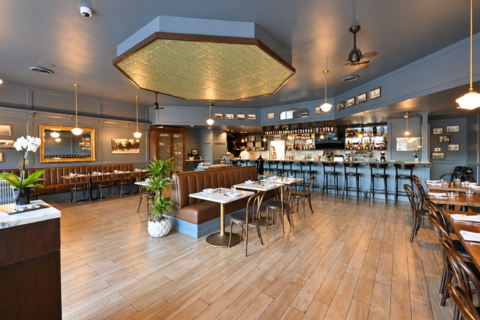
Christine and I went to check out the new Crystal Springs Tavern shortly after it opened late last year in ‘25.
Having both spent years in the food-service business—including running our own place—we know better than to judge a new restaurant during its first few laps around the track. Every new kitchen deserves a few weeks to find its rhythm, exorcise the gremlins, and figure out where somebody hid the extra ramekins.
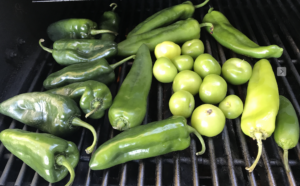
That was when we first met Matt, the chef-owner, although not actually at the restaurant. We bumped into him at the produce market in the adjoining strip center on our way to dinner. There he was, gathering a few last-minute provisions for that evening’s service. Nothing says chef-owner quite like making an emergency produce run before dinner.
When we arrived at the Tavern, we met his partner in crime—and business—Max, who serves as the frontman and runs the bar. Frankly, who wouldn’t want that assignment?
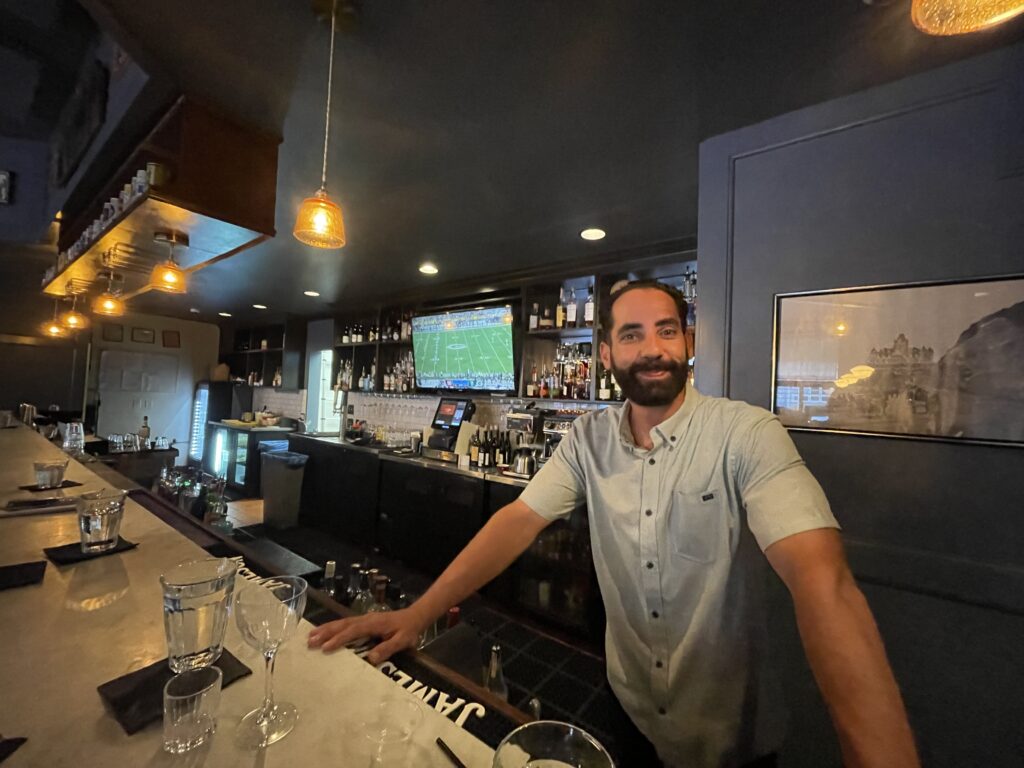
We also prefer sitting at the bar rather than at a table. Years of experience have taught us that service tends to become remarkably attentive when the person taking care of you is standing three feet away for most of the evening.
One glance at the menu tells you this isn’t exactly your standard-issue neighborhood tavern fare. There are ingredients and preparations you’re more likely to encounter in a fine-dining room than next to a pint glass.
Grilled Prawns — $17
Take the prawns. When was the last time you encountered head-on grilled prawns with green harissa and Espelette rémoulade on a tavern menu?
We had to order them.
Espelette is a pepper from the Basque region of France, prized more for its warm, slightly fruity character than for brute-force heat. The resulting sauce is creamy, gently spicy and tangy, with enough acidity to keep everything lively.
We order the prawns virtually every time we’re there, and they’ve consistently been spot-on.
And if you’ve never summoned the courage to suck the juices from the head of a properly cooked prawn, you are leaving the best part behind. It may not be particularly dignified, but dignity is overrated at dinner.
Maitake Mushrooms — $16
Another wonderfully oddball creation is the Maitake mushroom with Kentucky-fried burnt onion, togarashi aioli and chives.
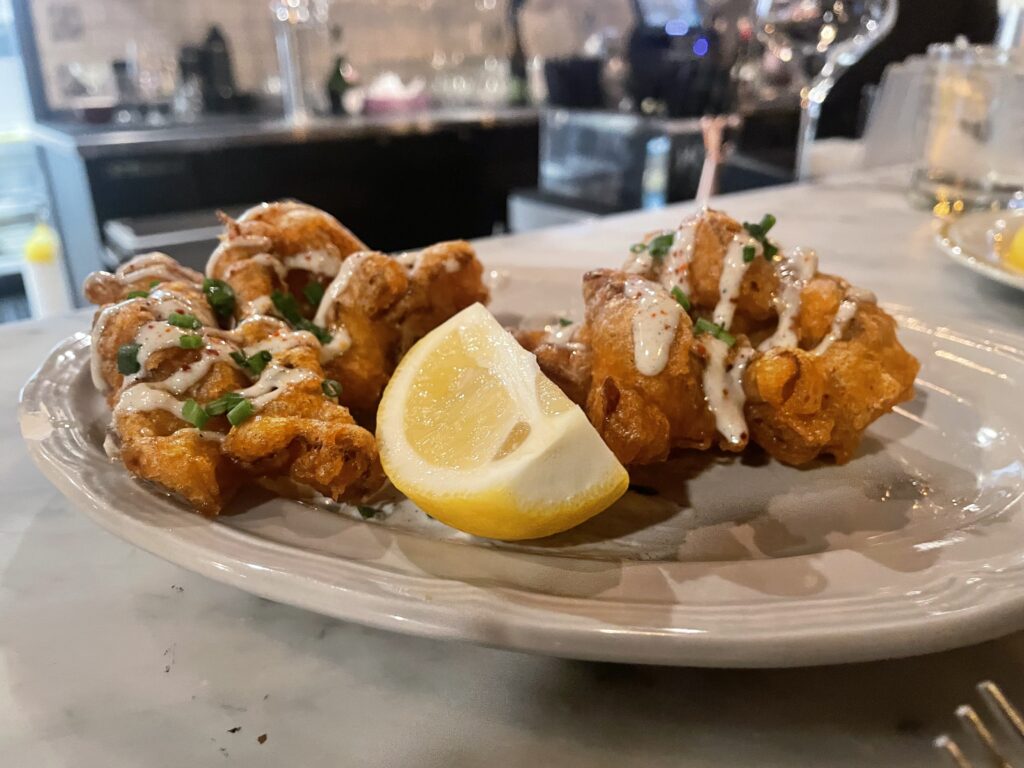
We’ve eaten sautéed mushrooms in more restaurants than we can count, and we’ve certainly encountered our share of fried mushrooms. These, however, are in another league.
They are astonishingly light and airy—the coating flirting with tempura rather than disappearing beneath a heavy shell of batter. A restrained drizzle of lemony aioli brightens the whole affair.
Calling them fried mushrooms almost does them a disservice. They’re closer to crisp little mushroom clouds of happiness.
Kanpachi Kinilaw — $21
Another starter that has become practically compulsory for us is the Kanpachi Kinilaw.
Yes, another name that may require a little translation.
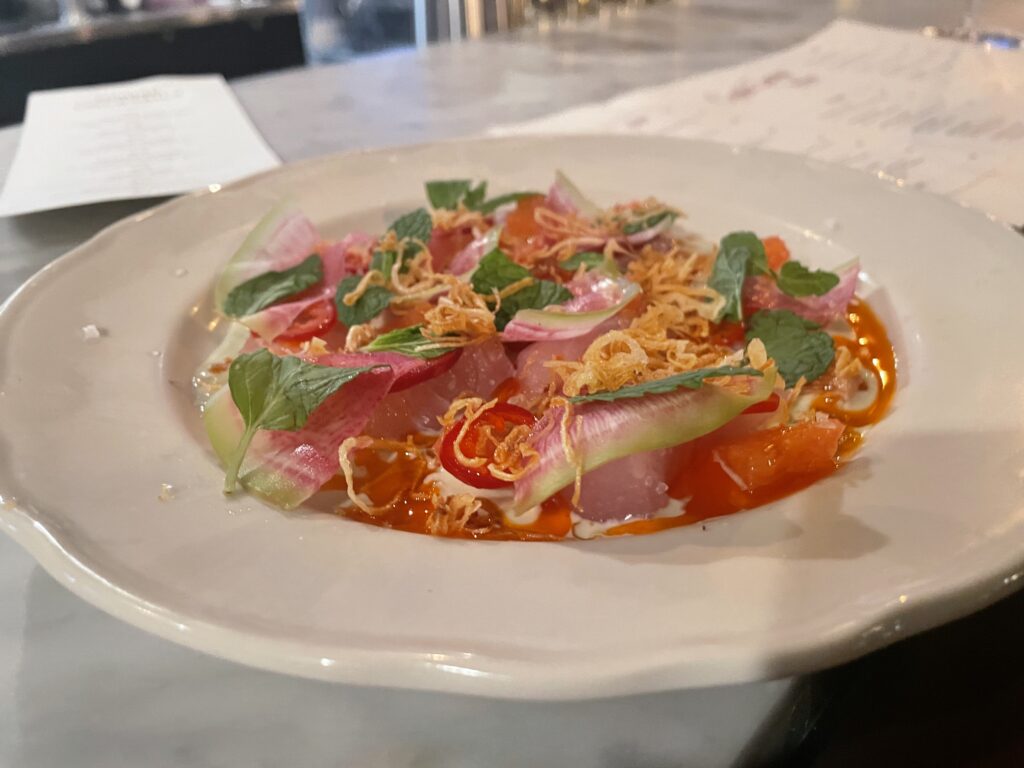
Kanpachi is a firm, rich amberjack closely related in style and texture to the yellowtail many people know from sushi restaurants.
But the fish itself is only the opening act.
This preparation lives somewhere in the fascinating territory between crudo, ceviche and Filipino kinilaw, with some of the bright, electric acidity you might associate with Peruvian leche de tigre.
Matt’s version is firmly Filipino-inspired:
Filipino-style crudo, Cara Cara oranges, coconut calamansi vinegar, watermelon radish, fried shallots and Fresno chile oil.
And somehow all of those ingredients remain on speaking terms.
The small pieces of fish are only briefly introduced to the acidic marinade, preserving the silky raw texture rather than curing them into submission. Lime sneaks into the conversation, while tiny drops of house-made Fresno chile oil bring warmth and depth without hijacking the dish.
There is a lot going on here.
Coconut calamansi vinegar brings a bright, floral citrus character. Calamansi itself tastes somewhere in the neighborhood of lime, mandarin and kumquat, but with a personality very much its own.
We were convinced there might even be a little makrut lime hiding in the background, although Matt has yet to confess.
The Cara Cara orange contributes sweetness and softer citrus acidity. Paper-thin watermelon radish adds snap and color; delicate Fresno chili slices provide a whisper of heat; microgreen mint brings freshness; and fried shallots supply the final crunchy punctuation mark.
It is one of those dishes where every forkful seems slightly different from the last.
Take a bite, close your eyes, and you could almost imagine yourself somewhere in the Philippines, eating beside the water at sunset.
Then you open your eyes and realize you’re still on Polhemus Road.
Our only complaint is that it isn’t an entrée.
Little Gem “Wedge” Salad — $21
Which brings us to the Little Gem “Wedge.”
Think of it as the traditional steakhouse wedge salad after it went away to culinary school.
The familiar bacon-and-blue-cheese idea remains, but Matt trades the dense iceberg wedge for tender Little Gem lettuce, then adds pickled shallots, herbs, and proper lardons instead of predictable bacon bits.
It retains everything satisfying about a wedge salad while shedding some of its culinary lumber.
New York Strip — $47
There is an old saying: Good things aren’t cheap, and cheap things usually aren’t good.
So on our most recent visit, we ponied up for the New York strip with peppercorn sauce.
Actually priced well, the steak arrived beautifully seared, but what really interested us was the sauce.
I make demi-glace at home and use it for our own steak au poivre, which has unfortunately made me rather insufferable about peppercorn sauce. Most restaurant versions disappoint me. Only the Iron Gate in Belmont has a tableside version that can compete with this tavern’s sauce.
This one did not.
The sauce had the depth and richness that au poivre demands without turning into brown gravy wearing a French beret.
Served with house-cut frites, it is the kind of straightforward steak dinner that should satisfy even a fairly persnickety carnivore.
Fish + Chips — $31
Huachinango snapper, frites and house tartar sauce
Matt takes the same light-handed approach to batter that makes the Maitake mushrooms so successful and applies it to the fish.
The result is a crisp, airy shell rather than the thick armored plating that too often passes for fish-and-chips batter.
Huachinango is red snapper. I’ll admit that red snapper would not ordinarily be my first choice for fish and chips. I generally prefer the thicker, meatier flakes of halibut or Pacific cod.
And yet this works.
We’ve ordered it several times now.
Barbara’s Fish Trap over in El Granada has long been a local benchmark for fried fish, and Crystal Springs Tavern is producing a version worthy of being mentioned in the same conversation.
That’s saying something.
Still Evolving
Crystal Springs Tavern continues to evolve, which is exactly what a good young restaurant should be doing. Matt and Max appear to be paying attention to what their customers respond to, experimenting, adjusting and occasionally tinkering with the menu.
That means our advice comes with a warning:
Go try it before somebody decides to remove one of our favorite dishes.
We would take that personally.
Crystal Springs Tavern
742 Polhemus Road
San Mateo, CA
(650) 865-3660
Tuesday–Saturday
5:00 PM–9:00 PM
About the Author: Drew Morgan started in the food service business in 1974 and devoted himself to his craft for 16 years, owning his first restaurant and catering company at age 22.
Drew & Christine live in Belmont, CA, where they own and operate their real estate company, MorganHomes.