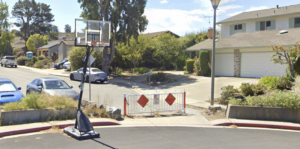

The story of a Belmont landmark that stood at Ralston Avenue and Old County Road for nearly a century.
Long before Belmont became the bustling community we know today, the intersection of Ralston Avenue and Old County Road was the heart of town. Known as The Four Corners, this crossroads was home to hotels, saloons, blacksmiths, livery stables, and general stores serving residents and travelers along the Peninsula.
Among those early businesses was a general merchandise store that would become one of Belmont’s most recognizable landmarks. Over the decades, it would change owners, appearances, and purposes, eventually becoming the familiar Country Store, remembered by many longtime residents as the Pink Building.
Its history reaches back to the 1800s.
The Early Years: Emmett & O’Neill General Store
In 1880, Walter A. Emmett and Matthew J. O’Neill acquired an existing general merchandise business at the northwest corner of Ralston Avenue and Old County Road. The store had previously been associated with Carl Janke, another prominent figure in Belmont’s early commercial development.
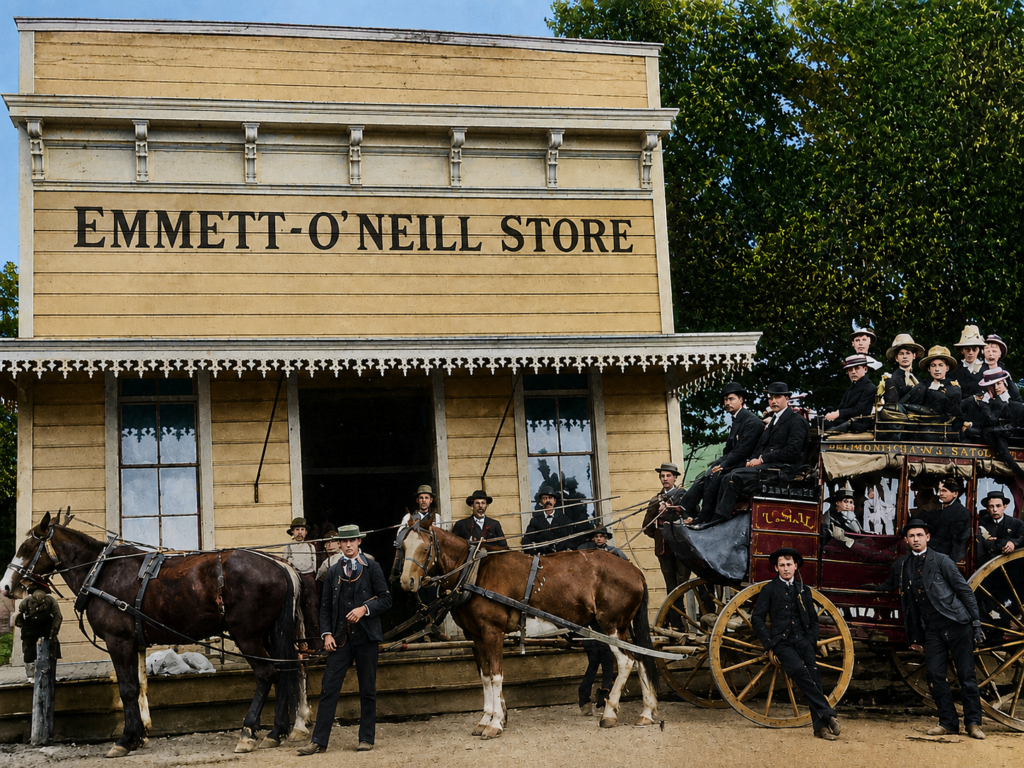
At the time, a general store was much more than a place to purchase groceries. It was a vital part of community life, providing everyday necessities, household merchandise, and supplies for residents and travelers.
In 1888, Emmett purchased O’Neill’s interest in the business and continued operating independently.
Emmett became one of Belmont’s most influential early businessmen. In addition to his store, his ventures included the Belmont Soda Works, livery stables, and other local enterprises. He also served as Belmont’s postmaster and was a strong supporter of the developing business district.
A New Building in 1903
Although the store’s business history began much earlier, the building that would eventually become the famous Pink Building was constructed in 1903.
The new structure featured a prominent roof tower, large storefront windows, and awnings stretching across the front. A sign identified the business as W. A. Emmett’s General Merchandise.
A postcard mailed in August 1908 captures this impressive commercial building, with its distinctive roofline and windows overlooking the busy intersection.
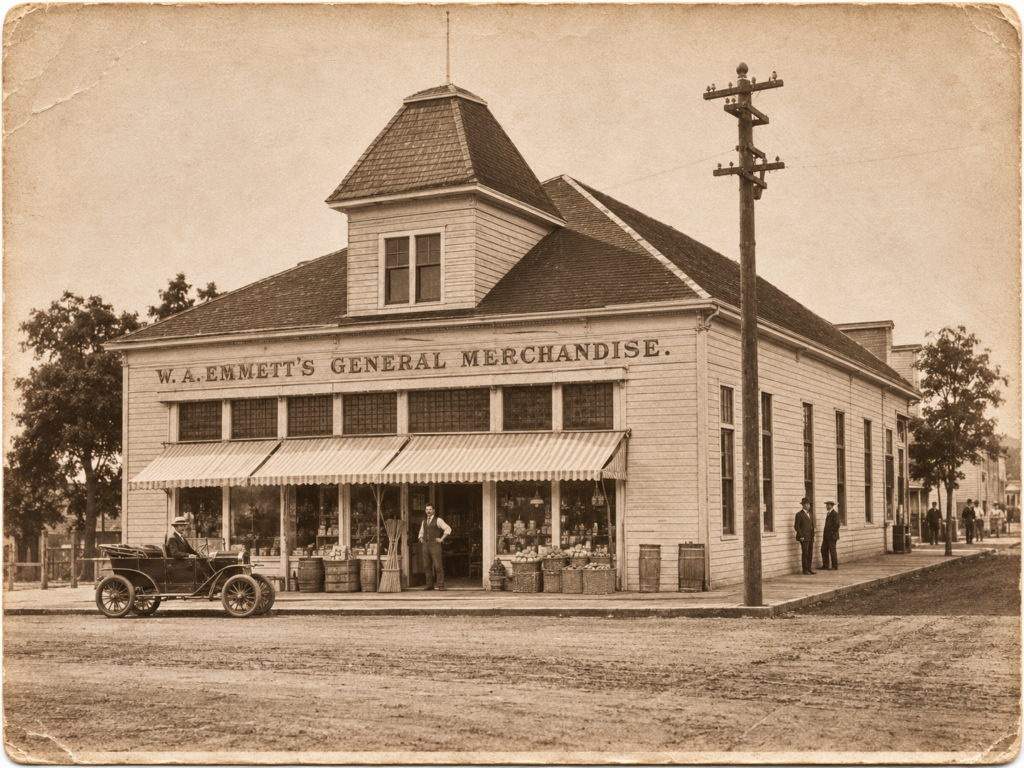
Caption: W. A. Emmett’s General Merchandise Store, early 1900s. Sepia-toned artistic recreation inspired by a historic postcard. Some details are interpretive.
From General Store to Country Store
As Belmont evolved from a rural village into a growing suburban community, the store evolved with it.
By approximately 1930, Emmett had stepped away from the business. Local historical accounts describe subsequent grocery and butcher operations, followed by an entirely different use during World War II.
During the war, the building served as a hospitality center where military personnel could gather, enjoy refreshments, and visit with local volunteers.
In the postwar years, the building accommodated other commercial uses, including furniture and antique businesses.
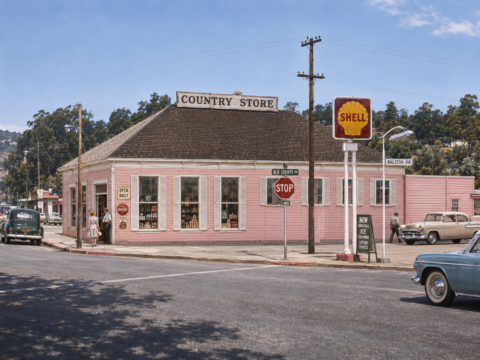
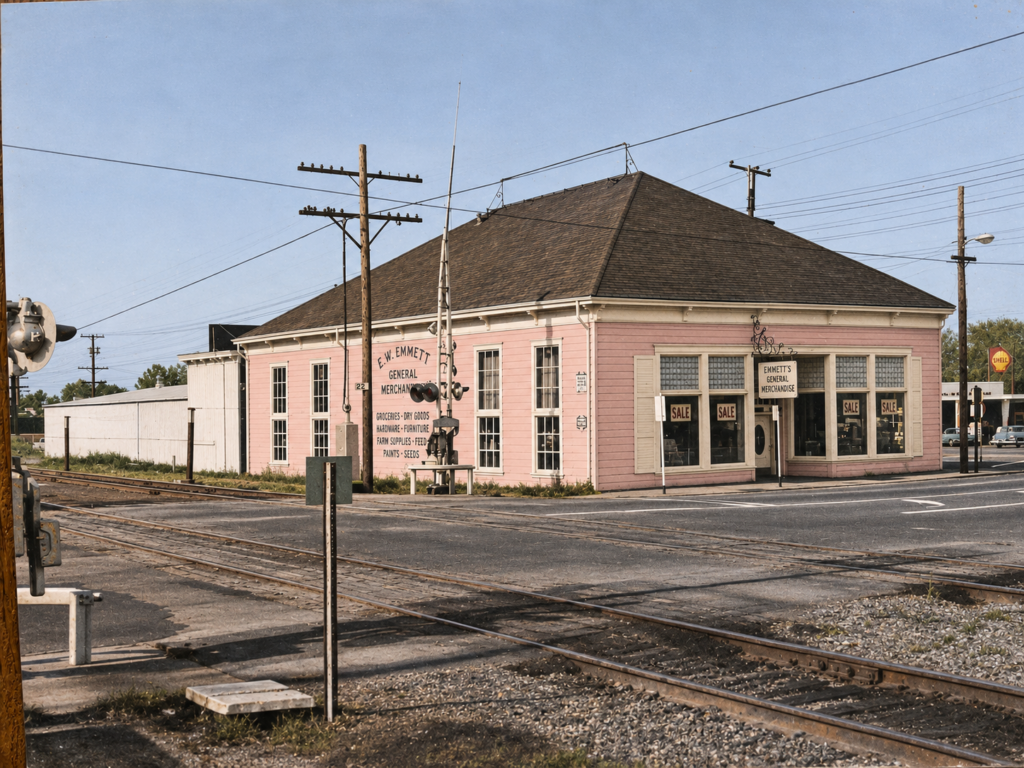
By the 1960s, photographs identified it as the Country Store. The once-distinctive roof tower had disappeared, and alterations to the exterior reflected the changing needs of the businesses occupying the structure.
The building was white for much of its existence. Its famous pink exterior apparently arrived around the late 1970s, earning it the affectionate nickname The Pink Building.
For longtime Belmont residents, it became an unmistakable landmark at the corner of Ralston and Old County Road.
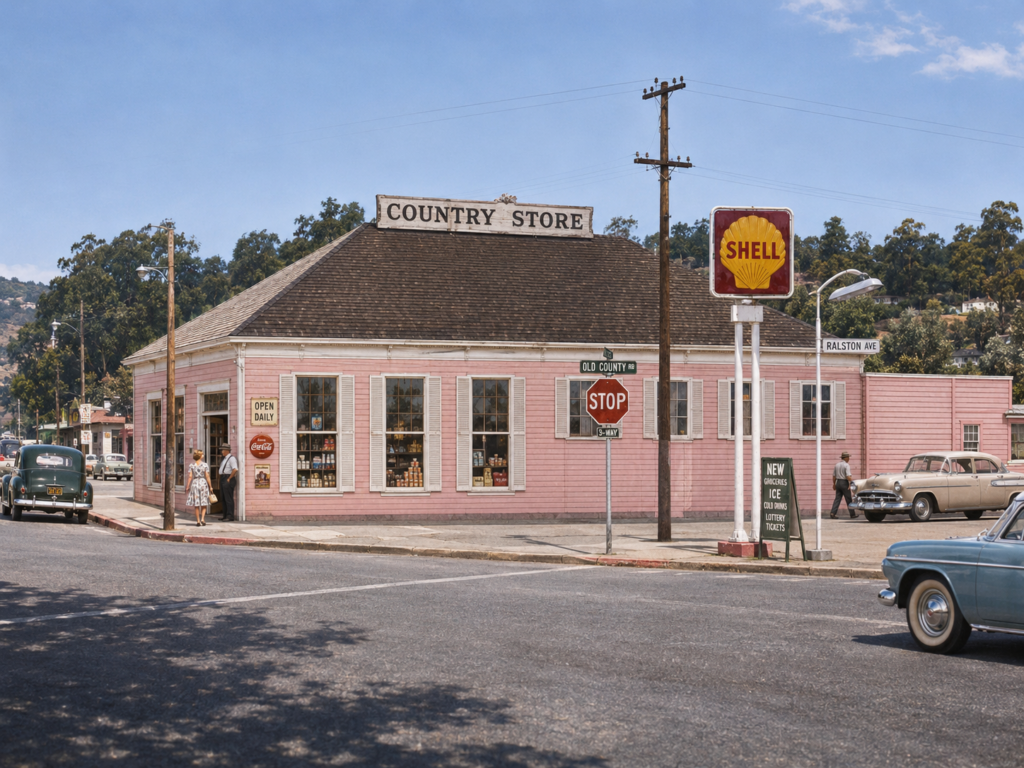
Caption: Belmont’s Country Store at the northwest corner of Ralston Avenue and Old County Road. AI-assisted artistic color reconstruction inspired by historical photographs. The light pink color reflects the building’s later appearance.
Timeline: More Than a Century of Belmont History
- Before 1880: A general merchandise business operates at the historic Four Corners intersection under earlier ownership.
- 1880: Walter A. Emmett and Matthew J. O’Neill acquire the general merchandise business.
- 1888: Emmett purchases O’Neill’s share and continues operating the store.
- 1903: A new general merchandise building is constructed on the northwest corner, replacing an earlier structure.
- 1908: A surviving postcard, mailed in August, depicts W. A. Emmett’s General Merchandise Store with its prominent roof tower.
- Around 1930: Emmett’s involvement ends, and the building passes through other commercial uses.
- 1940s: During World War II, the building serves as a hospitality center for military personnel.
- 1960s: Historical photographs show the altered building identified as the Country Store.
- Around the late 1970s: The building receives its memorable pink exterior.
- 1996: Plans for the railroad grade-separation project threaten the historic structure. Community preservation efforts seek to save or relocate it.
- April 1998: Despite efforts to preserve the building, it is scheduled for demolition to accommodate the project separating railroad and automobile traffic.
The End of a Belmont Landmark
By the 1990s, traffic congestion had transformed the intersection from the quiet crossroads of early Belmont into one of the Peninsula’s busy transportation corridors.
The railroad grade-separation project was intended to improve safety and traffic flow by eliminating conflicts between trains and vehicles at Ralston Avenue.
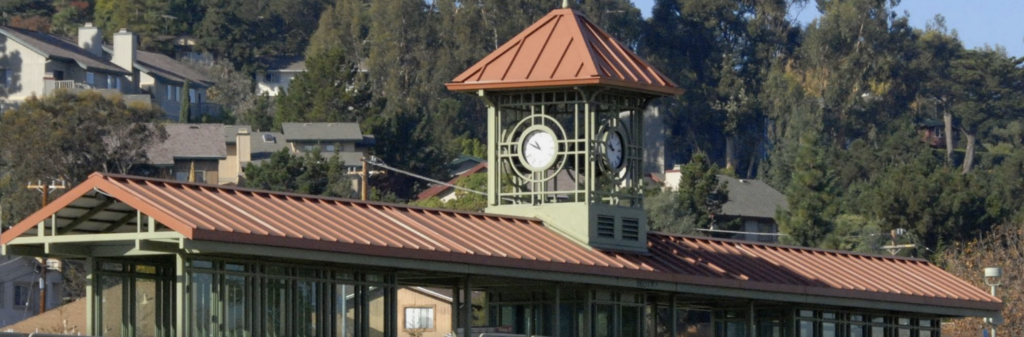
Unfortunately, the historic Country Store stood in the path of the improvements.
Preservationists, including members of the Belmont Historical Society, worked to save the building. At one point, plans contemplated moving it approximately 60 feet north and giving it a new purpose.
But escalating project costs ultimately ended those plans.
In April 1998, the building’s final public tours were announced, and demolition proceeded later that month.
The 4,500-square-foot building that had witnessed nearly a century of Belmont’s commercial history was gone.
A Little Piece of Belmont Lives On
Although the Country Store disappeared, another important part of Walter Emmett’s legacy survived.
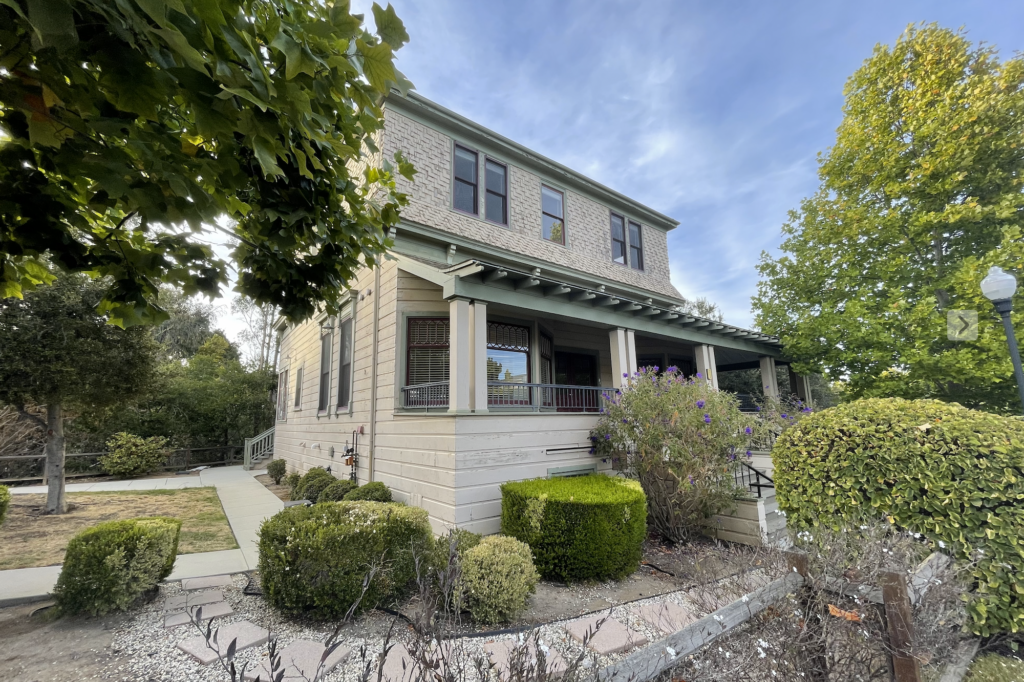
His historic residence, once located on Ralston Avenue, was moved to 1000 O’Neill Avenue in January 2008. The restored Emmett House was officially dedicated in March 2011 and remains an important reminder of Belmont’s earliest business community.
The story of Emmett & O’Neill’s store illustrates how much a community can change while still retaining the memories of the places that helped shape it.
Today, thousands of people travel through the intersection of Ralston Avenue and Old County Road without realizing that one of Belmont’s most important early businesses once stood there.
For those who remember the Pink Building, it was a familiar part of everyday life. For newer residents, its story offers a fascinating glimpse into the Belmont that came before us.
Do you remember the Country Store or the Pink Building? We would love to hear your memories or see any photographs you might have of this historic Belmont landmark.
Part of our ongoing exploration of Belmont’s fascinating local history, shared by Drew & Christine Morgan of MORGANHOMES.
Historical References
This article draws on the historical writings of Russel Estep, the Belmont Historical Society, the City of Belmont’s historical photo collection, and contemporary newspaper reporting.
Additional references include:
City of Belmont Historical Photo Tour
The Final Days of Pink Building, San Francisco Chronicle, April 4, 1998
Future of Belmont’s Pink Building in Question, June 21, 1996
We hope you are enjoying our Centennial Series−The Streets Arouned us.